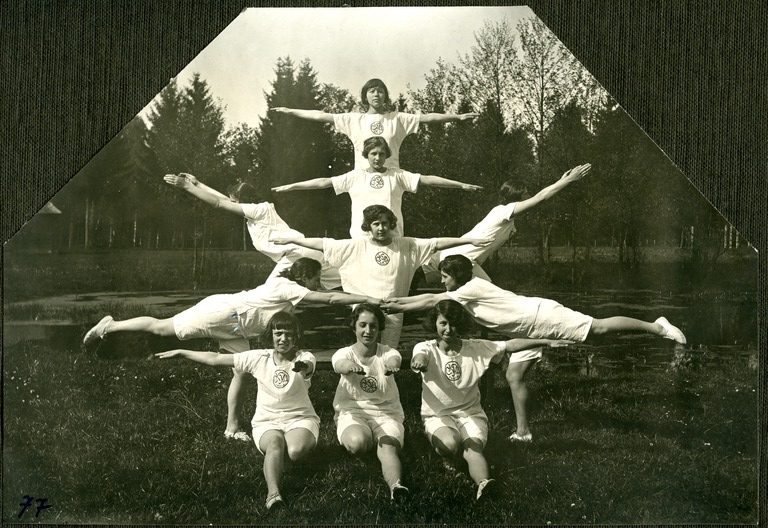
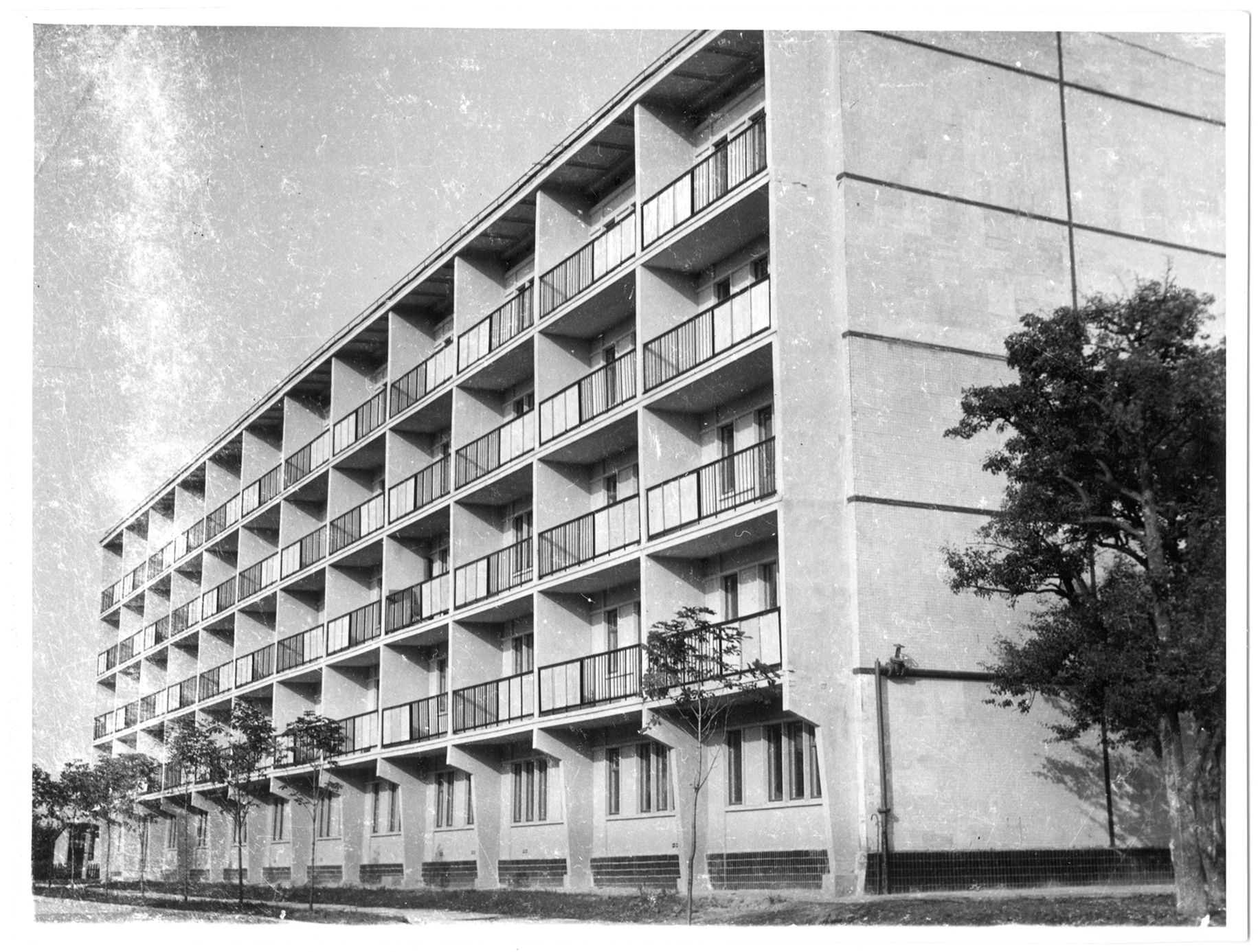
From Oral History to Working with Photography
The public organisation After Silence was founded in Lviv in 2021. Its co-founders include historian Andrii Usach and cultural manager Anna Yatsenko. The organisation operates at the intersection of memorial culture, public history and social anthropology. Its work focuses on the traumatic experiences of the periods of Soviet and Nazi violence: the Second World War, the Holocaust, forced labour and mass repression.
Initially, oral history stood at the centre of Andrii and Anna’s work. Their first realised project was the documentary film Voicelessness (Bezholossia, 2021), dedicated to field research into Holocaust memory in Turka, in Lviv region. Before the war, Jews made up more than 40 per cent of the town’s population; today, no Jewish residents remain. While working on the film, the researchers began systematically examining family photo archives together with their interviewees, and gradually became deeply engaged in photography as a source in its own right.
“People would send us photographs, such as Yakov Brandelstein from Israel, whose images were included in the film because we were telling the stories of those people. For the past two and a half years or so, we have actually worked more with photography than with oral history,” recalls Andrii Usach.
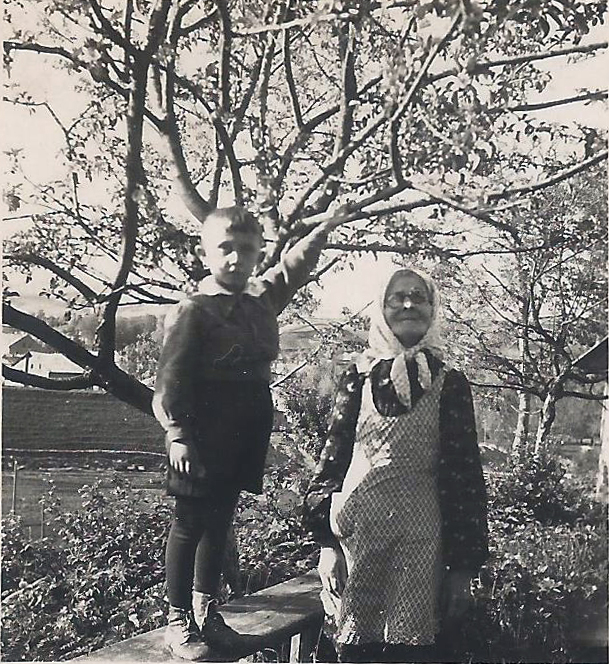
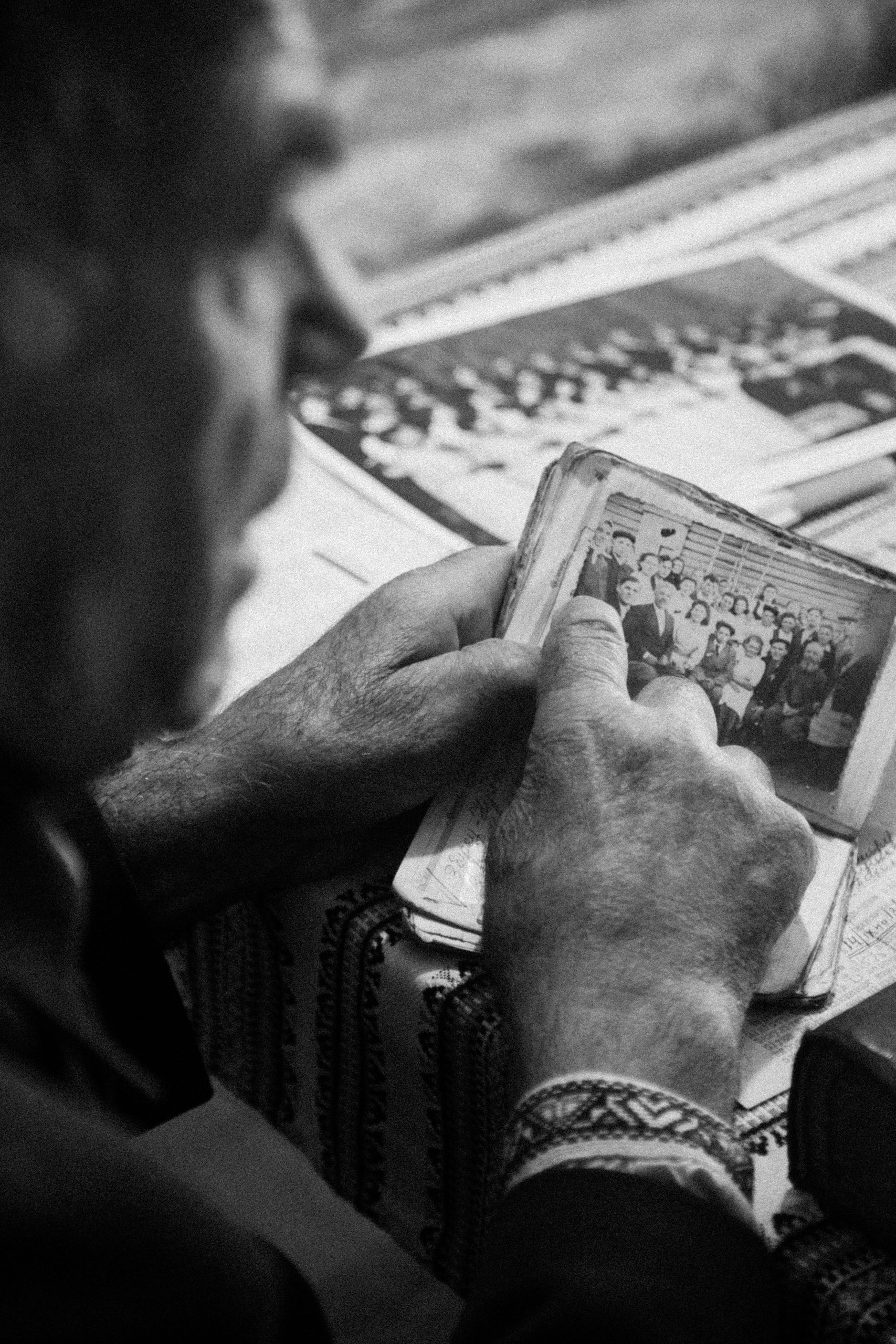
At first, photography served as a supplement to interviews and often fulfilled an illustrative function. Over time, however, the researchers began to notice much more: which photographs people wanted to talk about and which they did not; which they preferred to hide; how they presented them; and how they were stored within the home. During fieldwork, Andrii acts as the interviewer, while Anna works as videographer and photographer. When a person turns the pages of a photo album and comments on the images, the camera focuses on their hands. This tactile interaction functions as a trigger, prompting spontaneous recollections and reflections.
Very few witnesses to the events of the mid-twentieth century remain alive today. Those who do are often in their nineties or even over one hundred years old, and it can be physically difficult for them to recall and recount their experiences. As a result, the organisation increasingly works with descendants and directly with photographs themselves. Its methodology combines field research, oral history, and the digitisation of private archives. To date, more than 6,000 objects from 9 private archives have been digitised, 561 of which have been catalogued and are available upon request on the organisation’s website.
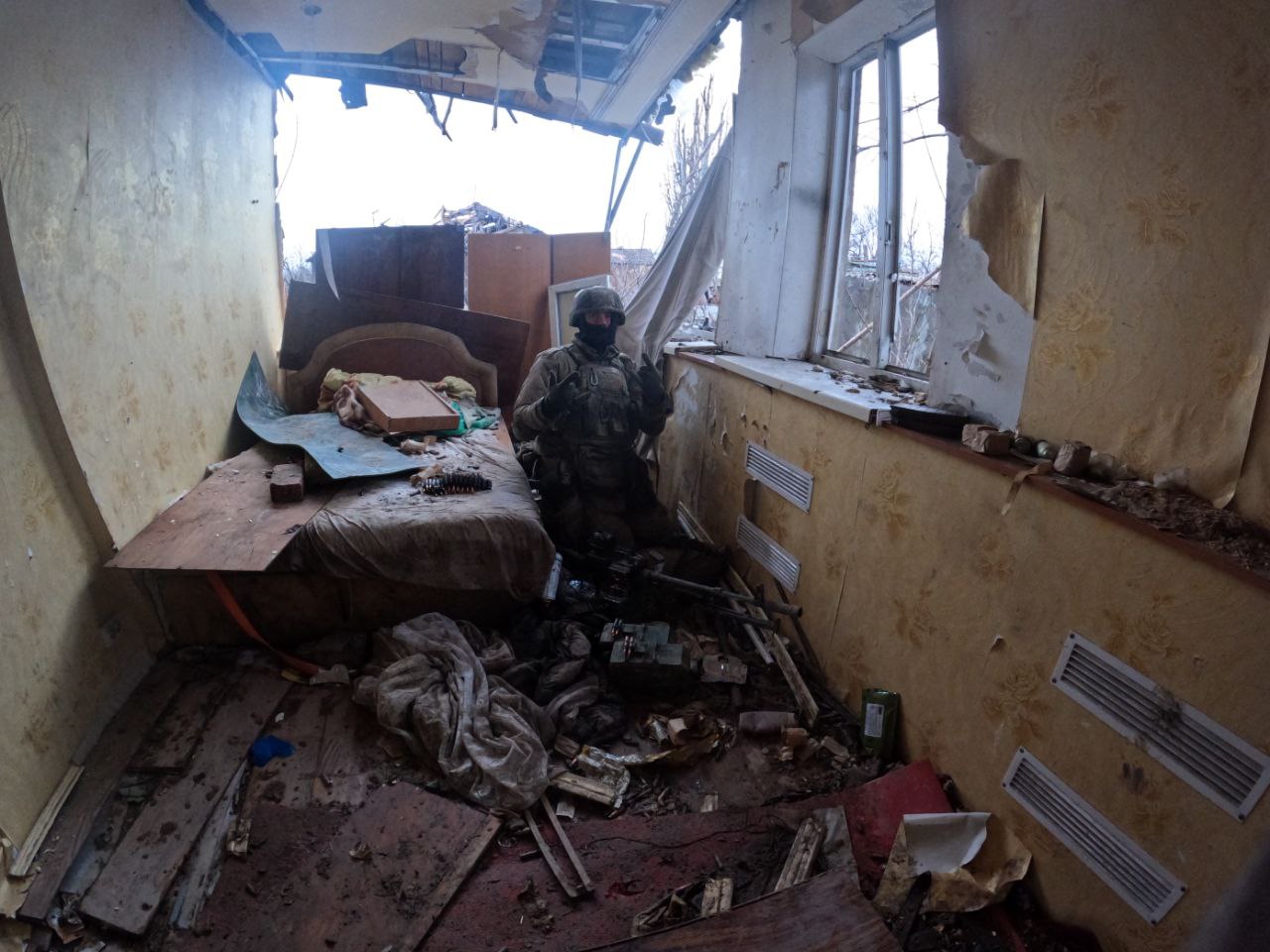
Since 2022, the organisation’s work has expanded to include documenting experiences of the current war. Although based in Lviv, After Silence operates across Ukraine – from Uzhhorod to the front-line city of Zaporizhzhia, where volunteers recover photographic negatives and documents belonging to evacuated families.
Where Orphaned Archives Come From
The materials reach After Silence through several channels. The first is field expeditions. The organisation has carried out expeditions in thirteen regions of Ukraine, recording oral history interviews and digitising family archives. Some owners have also donated original materials for permanent preservation – always on their own initiative. One such case was Halyna Lozynska from Zhovkva, who transferred an archive belonging to her grandmother and father relating to Soviet mass repression, including imprisonment in GULAG camps and deportations to Siberia. Her reasoning was simple: after her, there would be no one left to preserve these materials.
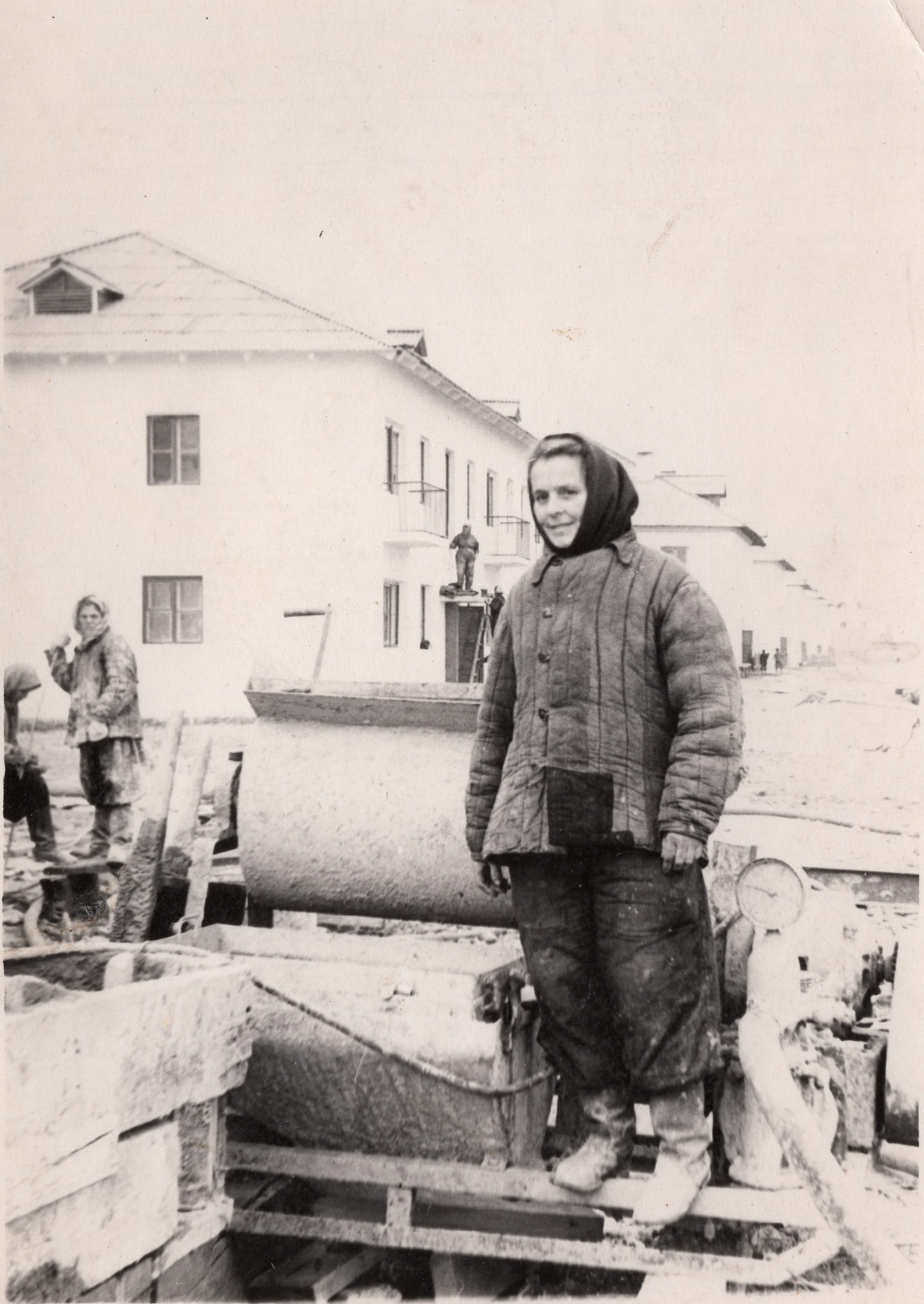
The second channel consists of online auctions and flea markets. Most original photographs are located and purchased by Andrii himself. Sellers frequently disperse coherent archives by listing each photograph separately, forcing the organisation to reassemble them piece by piece. The descriptions attached to auction lots reflect the logic of commerce rather than documentation. One photograph, for example, was labelled “with 051 badges”, where “051” was a transliteration of the abbreviation “OST”. A photograph showing a forced labourer’s badge and a picture from a school album appear side by side in an endless catalogue of listings – both are simply old photographs, both are commodities.
Sellers are rarely able, or willing, to explain the provenance of the images.
“We always ask whether the seller knows which village or town the photographs come from, or who they belonged to. Even the smallest piece of information – a first name or surname – can make a significant difference to further research,” says Andrii.
Occasionally, sellers prove helpful. Some send additional information in private messages; others include notes inside the parcel.
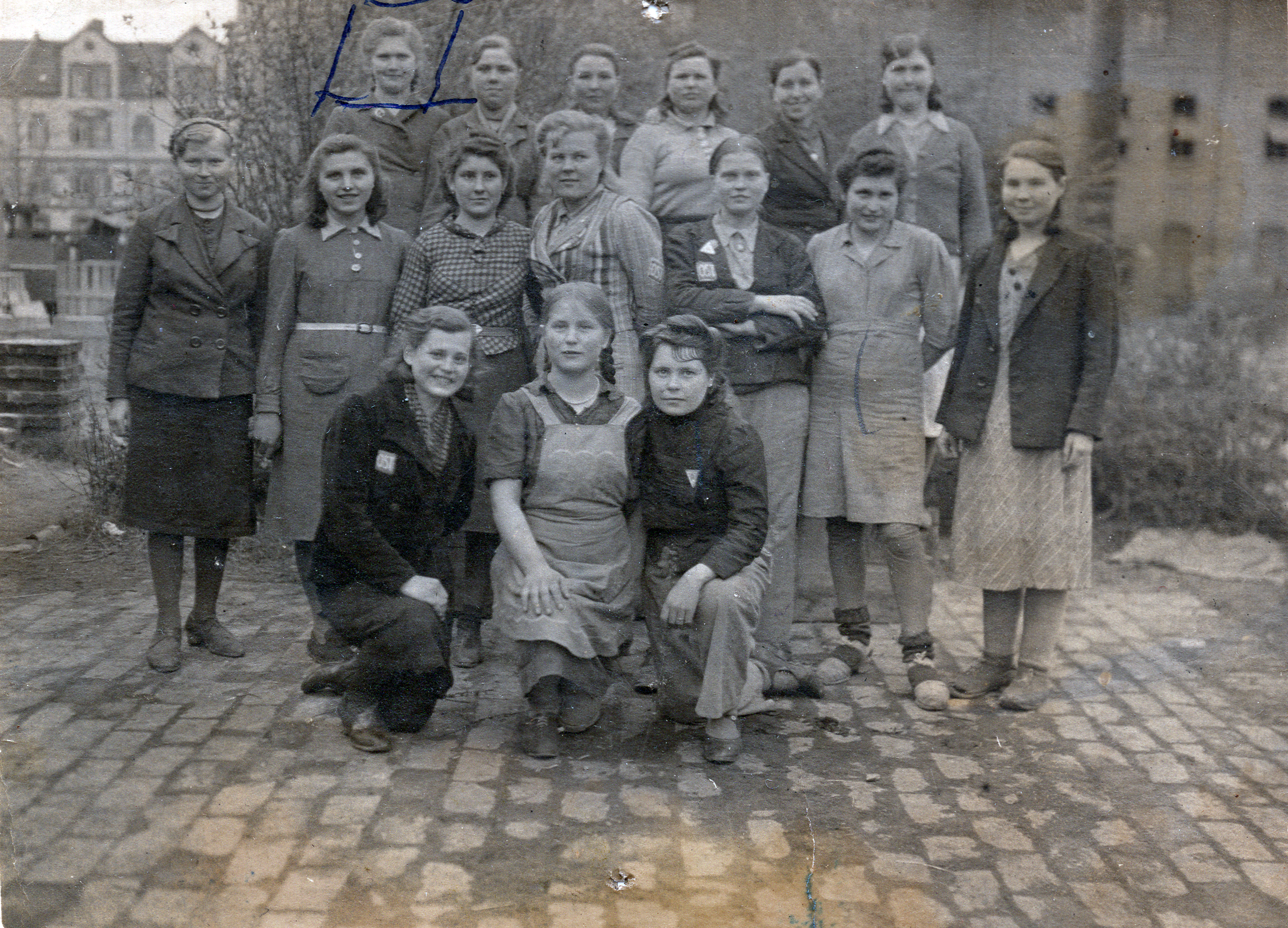
Only on a few occasions has After Silence dealt directly with relatives of the people represented in the archives. In one case, distant relatives offered to sell an archive for a symbolic sum and shared its history. In another case, a woman contacted the organisation through social media and sold photographs that did not belong to her family but to her neighbours. She explained that it would have been a shame for them to be lost, as their owners had no intention of preserving them.
Most often, photographs end up at auction after their owner’s death. When a person has no descendants, archives may be dispersed by unrelated individuals. In the worst cases, belongings are simply thrown away during a house’s clearing. Sometimes, heirs see no value in old photographs and dispose of them together with documents and books as waste paper. It is often there that resellers find them – and, ultimately, this is preferable to their destruction. Occasionally, photographs are even recovered from rubbish bins.
Archives may also pass through multiple owners. The organisation once purchased part of the photographic archive of an Ostarbeiter, only to encounter the remaining photographs from the same archive several years later in the possession of a different seller.
The war further complicates the situation. An archive in Chernihiv burned down on the second day of Russia’s full-scale invasion. In Zaporizhzhia, the front line lies only 15 kilometres from the city, while the State Archive has still not been evacuated or digitised.
After Silence preserves its materials in a specially equipped storage facility with controlled temperature and humidity conditions, while maintaining duplicate copies on cloud services and hard drives.
Reading the Photograph as a Document
The central and most methodologically developed area of After Silence’s work is its collection of photographs depicting Ukrainian forced labourers in Nazi Germany. During the Second World War, nearly two million people shared this fate. They were known as Ostarbeiter – “Eastern workers”.
Andrii and Anna were struck by how many such photographs appeared on online auction platforms. Evidently, they often hold little value for their current owners. Yet the people depicted in them can frequently be identified through their appearance, clothing, or badges. In 2022, the organisation launched the online archive During the Time Spent in Germany (Pid chas perebuvannia v Hermanii) – a title taken from the phrase most commonly written by Ostarbeiter themselves on the reverse of their photographs. The archive now contains nearly 600 photographs, with more than one hundred additional images scheduled to be added this year.
Over the years, Andrii and Anna have developed what might be described as a practised visual literacy – a system of visual markers that allows them to recognise a particular category of photograph even before beginning archival research. In the case of Ostarbeiter photographs, these markers include the distinctive quality and format of non-Soviet photographic paper, often bearing foreign stamps on the reverse; characteristic poses, such as men holding hands – a practice that later disappeared; women wearing shoes with white socks; hairstyles; and dresses made from the same fabric worn by several people at once. Finally, there is the small format typical of photobooth photographs.
During their period of forced labour, Ostarbeiter received wages, but had very limited opportunities to spend them. Food was distributed through ration cards; purchasing clothes was restricted; owning a camera was forbidden. Drinking beer and having one’s photograph taken, however, were permitted. Every photograph made in a studio or photobooth is therefore more than a portrait. It is a document of agency under conditions of total control – a material trace of one of the very few choices available to an individual.
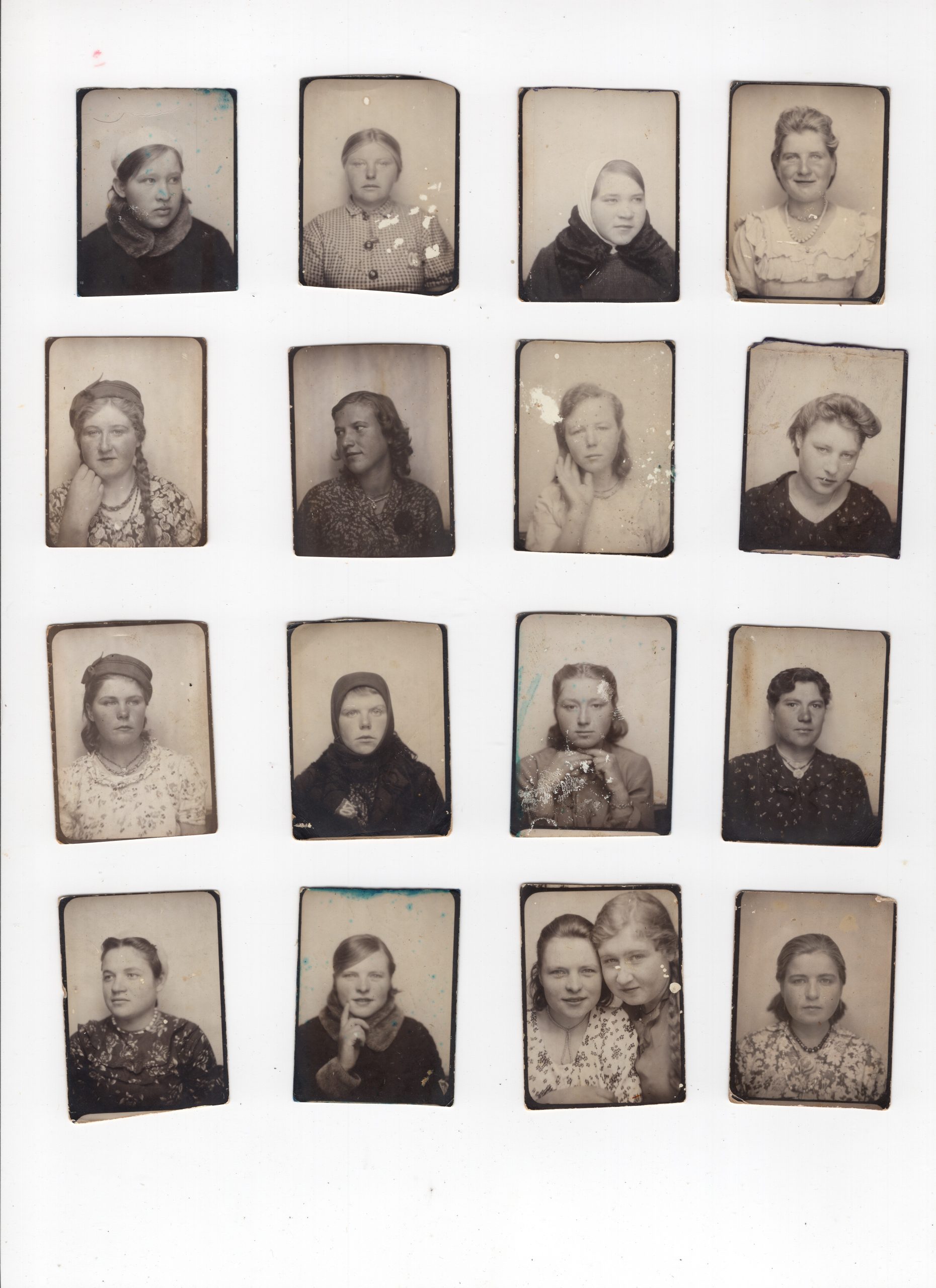
One particularly revealing detail concerns the “OST” badge itself. As a discriminatory marker of inferior status, it is often absent from photographs. Before posing for a photograph, people removed the badge, concealed it beneath outer clothing, or covered it with flowers.
“When you enlarge the scan, you can see that something is hidden behind the flowers,” says Andrii.
To be photographed without the badge meant, if only for a moment, ceasing to be a marked body. It was a form of visual resistance – a conscious reclamation of dignity within the only space where such a gesture remained possible.
A Detective Logic
Once a photograph has been located and purchased, After Silence begins a process that can best be compared to detective work. Its methodology combines several parallel strategies.
The first involves inscriptions on the reverse of photographs. Even fragmentary information – a reference to Khmelnytskyi region, Ust-Bakhan, or a person’s age – can provide a starting point for archival research.
The second relies on local Facebook groups such as “My Village Ivanivka” or “Native Kyrylivka”. Posting a photograph in such groups often leads to identification within a matter of days.
The third strategy involves comparing different archives. Faces become familiar over time, and the same person may unexpectedly appear in a photograph from an entirely different collection.
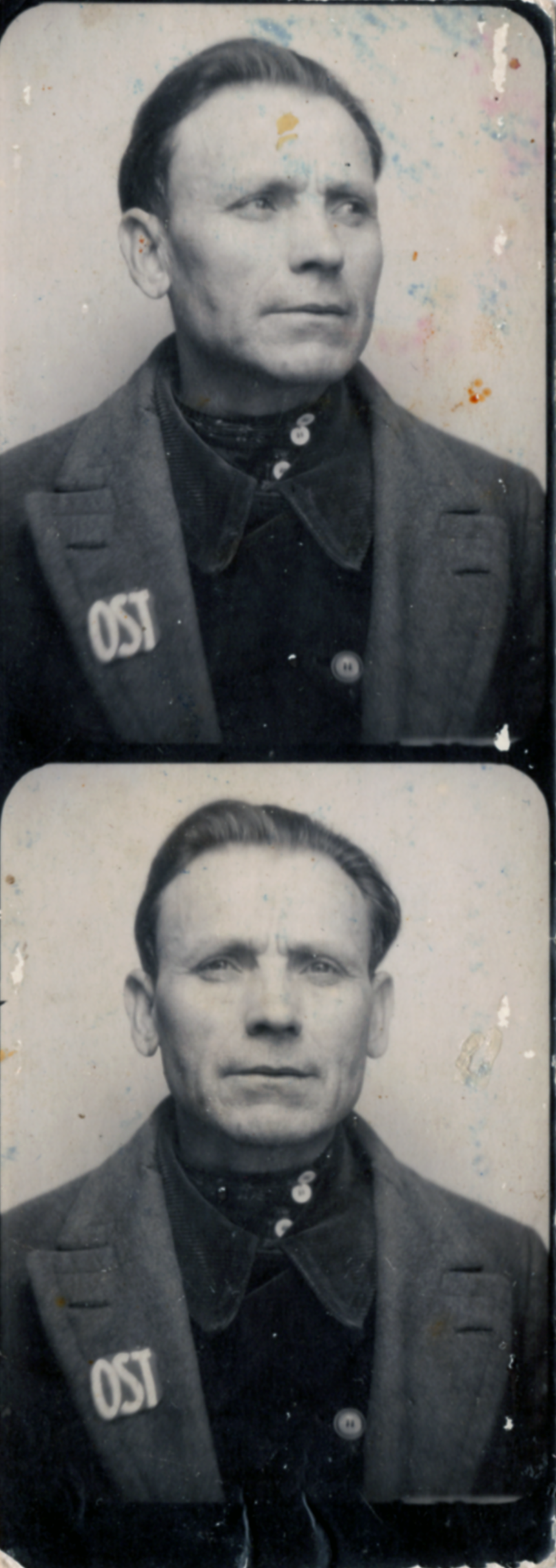
Among the photographs acquired by the organisation were two images of Ostarbeiter. One was a photobooth portrait of a man wearing an “OST” badge. The second depicted the same man together with two companions – Mykola Ripenetskyi, Feodosii Bezvushko and Areon Florko – all of them also wearing badges. The three men are well dressed, with pocket-watch chains visible on their waistcoats.
The photograph attracted attention because most previously encountered Ostarbeiter photographs depicted young people. In contrast, these men were significantly older – over forty years of age, as indicated on the reverse of the photograph.
“At first, we assumed they might have been prisoners of war, because this age group was unusual among Ostarbeiter,” recalls Andrii Usach.
Eventually, the researchers succeeded in identifying the man depicted in the portraits. He came from Khmelnytskyi region and had been deported to Germany for forced labour. Towards the end of the war, he was transferred to a concentration camp, where he died in the camp infirmary approximately one month before Germany’s capitulation. Before his death, he managed to send these photographs to his wife and children.
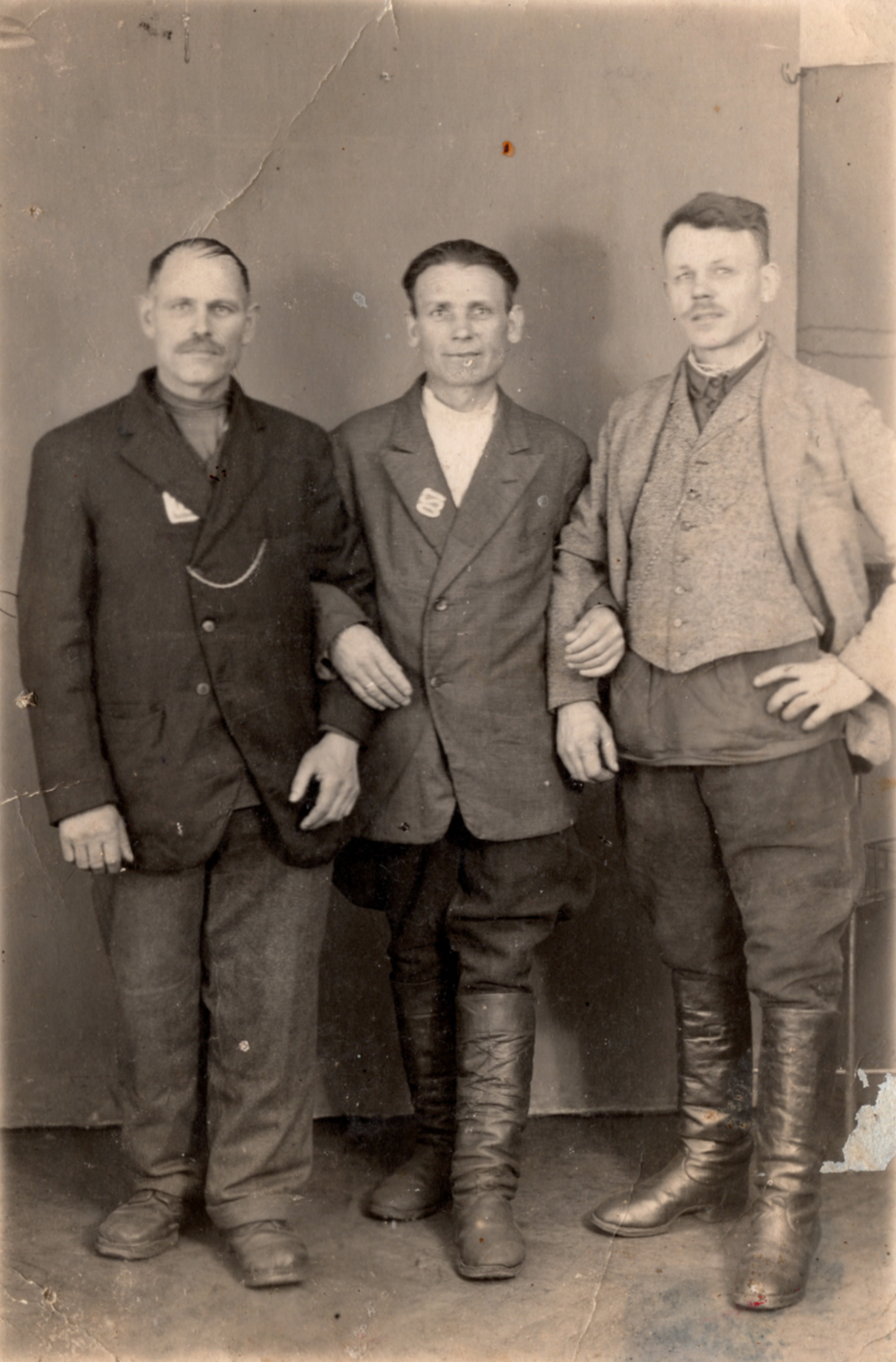
While researching his fate, the organisation became interested in the two companions shown in the group photograph. Their names were recorded on the reverse, making it possible to begin archival searches. Initially, the researchers were informed that no files relating to them had survived. Later, however, documents were discovered in the very same archive.
The team then posted the photograph in a Facebook group dedicated to the village of Kizia in Khmelnytskyi region, from which the men originated. A woman responded, explaining that one of the men in the photograph was her mother’s brother. He survived forced labour, returned home after the war, and died in his native village.
“She sent us his photographs, and when we asked her to photograph his grave, it turned out that the portrait used on the headstone was the very same portrait from the Ostarbeiter photograph. Evidently, no other suitable photographs of him had survived,” says Andrii.
This story acquired an unexpected continuation. When the woman went to photograph the grave, she encountered relatives of another man from the same photograph at a neighbouring burial site. This led to contact with a second family.
Later, a chance coincidence significantly expanded the circle of sources. Anna Yatsenko came across a social media post by writer Olena Pavlova, who was writing about her grandparents, both former Ostarbeiter. She had digitised family photographs and recorded their recollections. In one of the photographs, the researchers recognised the very same men. They arranged to meet, digitised the entire archive, and discovered that they were all fellow villagers from Khmelnytskyi region. They came from neighbouring villages and had known one another before being deported to Germany.
Thanks to the writer’s grandfather’s recollections, it became possible to partially reconstruct everyday life during forced labour and to understand the social function of such photographs. They served as keepsakes, gifts, a means of maintaining contact, and a way to leave one’s details for future communication. What had initially appeared to be two more photographs of Ostarbeiter ultimately revealed an entire network of interconnected human lives.
A similar detective logic, albeit involving a different type of source material and a much longer research horizon, unfolded around photographs of people deported to Siberia, which formed the basis of the exhibition From the Siberian Side: A Family Archive.
By the time work on the project began, there was no longer a single living member of the family who had personally experienced the repression. Even the youngest of those who had been deported had long since passed away. Photographs became the principal source material. Yet another problem emerged: descendants could identify only their closest relatives and often had no idea who appeared beside them in group photographs.
A particular challenge was posed by a large group photograph with no inscriptions, in which the archive’s owner was also absent. Only her fellow prisoners from the camp were depicted. To identify them, the researchers examined photographs from other archives, memoirs, publications and personal recollections. Eventually, they succeeded in confidently identifying five or six of the women.
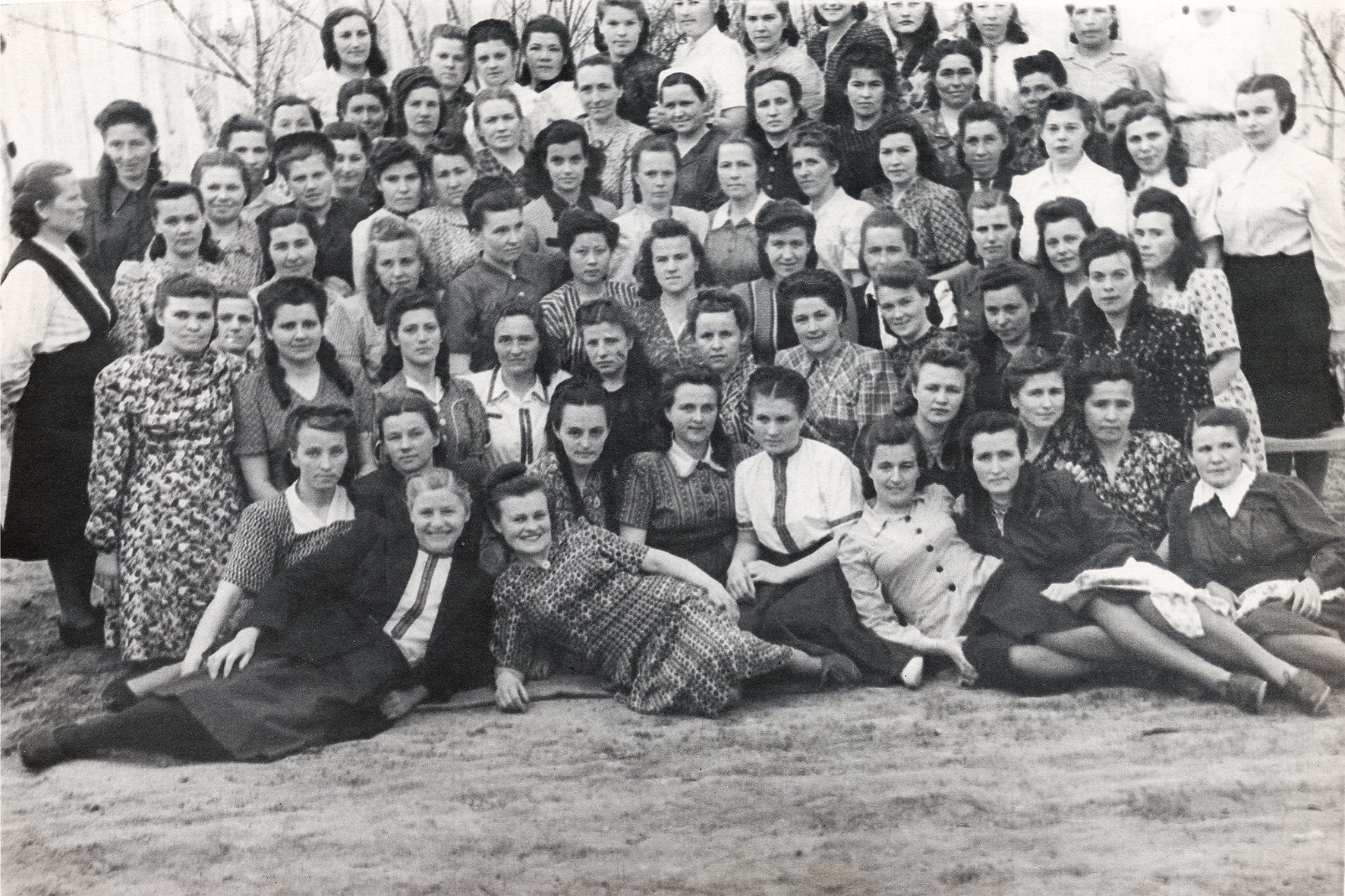
A key strategy involved comparing photographs from seemingly unrelated archives. People who had lived side by side in special settlements and met at holidays, funerals, and other gatherings often appeared together in photographs. This approach led the researchers to the archive of the family of Father Volodymyr Levytskyi, who had belonged to the same social circle.
Further investigation brought them to the Oral History Archive of the Ukrainian Catholic University. In interviews recorded during the 1990s, local residents did not directly mention members of the family being researched. However, among the photographs shown during those interviews, the researchers recognised some of the same individuals. In this way, a network of connections between different families gradually began to emerge.
Chance discoveries also played an important role. While searching for information about one of the women, the researchers remembered a memoir they had purchased years earlier from a second-hand bookshop. When they returned to it, they discovered that the author herself appeared in one of the photographs under investigation. The book also contained other photographs featuring the same women.
Such coincidences occurred repeatedly. Research would reach a dead end, only for crucial information to surface unexpectedly years later.
Another approach involves finding a living witness connected to a particular place. While working on the exhibition Myrne Pole (Ukrainian for “Peaceful Field”): Rural Photography, based on photographic negatives from the 1950s and 1960s from the village of Tersianka, historian Serhii Zvilinskyi tracked down a man living in Zaporizhzhia who had originally come from the village. He showed him the photographs while recording their conversation on video.
At first, Valerii Zalyvshyi recognised almost no one. Then, suddenly, while looking at one image, he exclaimed:
“That’s my grandfather!”
From that moment, an entire chain of family and village stories began to unfold.
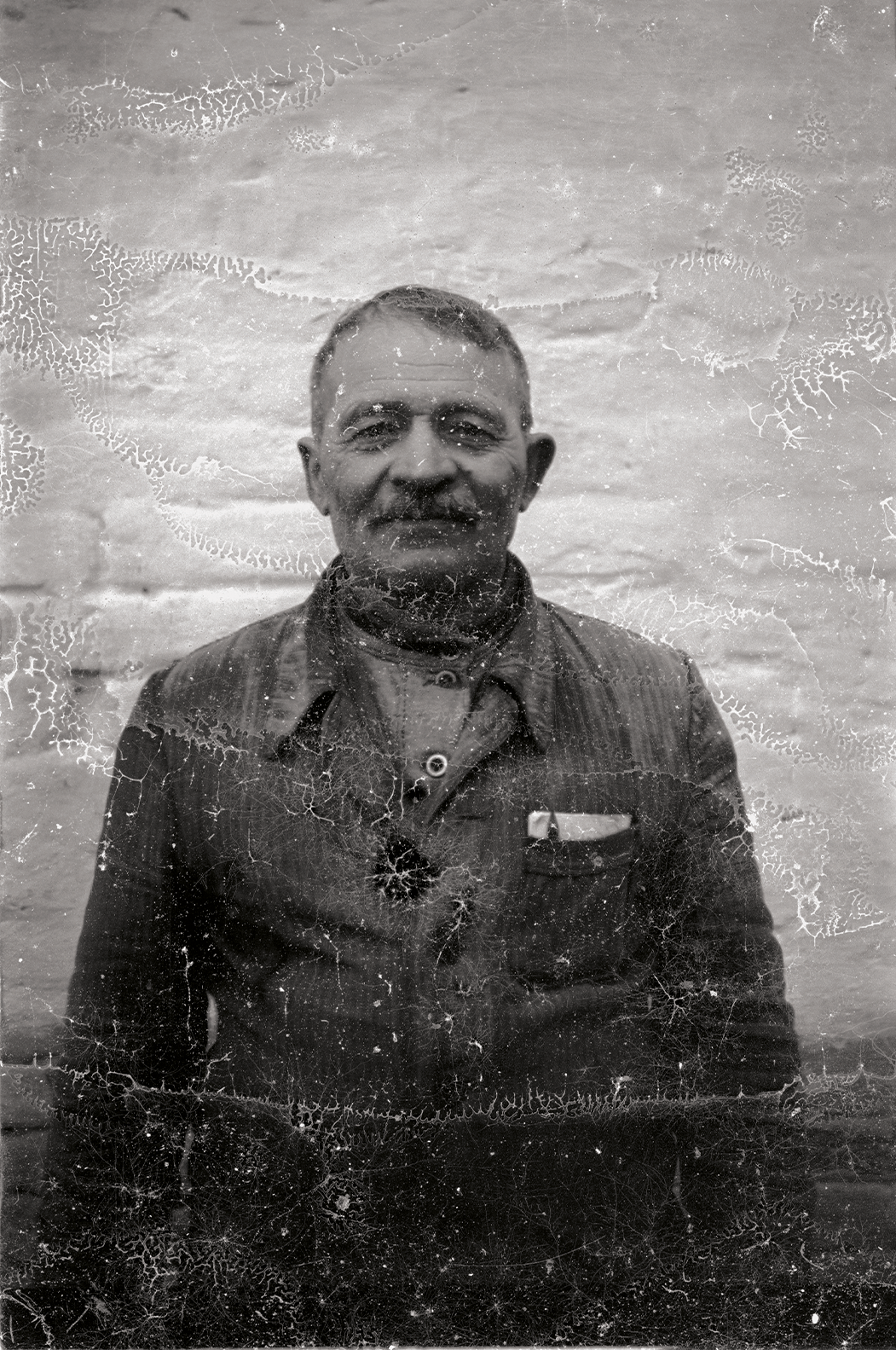
When photographs contain inscriptions, dates, place names, or references to institutions and enterprises, researchers can draw upon archival records and conduct systematic searches. Without such information, establishing an individual’s identity becomes far more difficult. As a result, a significant proportion of the photographs in the collection remain unidentified.
The Archive as a Living Practice
One of the paradoxes that runs through the work of After Silence concerns attitudes towards the original photograph.
“We do not need the originals,” says Andrii Usach, referring to the lack of storage space. “For our work, a high-resolution scan is enough.”
Families who have been forced to leave Ukraine and can no longer keep their photo albums often do not need the originals either. What they need are high-quality digital copies that can be shared with relatives and carried in a pocket. After Silence digitises these materials and either returns the originals to their owners or stores them in a specially equipped archive facility.
“We do need the originals, because the materiality of the photograph is extremely important,” counters Anna Yatsenko.
For researchers, the material qualities of an original photograph constitute a source in their own right. The type of paper can help establish when and where a photograph was produced. A studio stamp on the reverse may point to a specific town. Traces of moisture, folds, pencil inscriptions and other physical marks all form part of the photograph’s biography.
In this respect, the work of After Silence is close to what the anthropologist and photography scholar Elizabeth Edwards has described as the photograph-as-object: not simply an image, but a material thing with its own trajectory through time and space.
That trajectory can be a tragic one.
“We once visited a village where an elderly man came out and brought us a bundle of photographs. They were all wet and stored in a plastic bag. Anna sat outside digitising them, knowing that by the next visit, they might simply crack and disappear,” recalls Andrii.
Here, digitisation is not merely a process of archiving. It is an act of rescue, preserving a photograph at the moment when its material original still exists but is already under threat.
Sometimes the original has been lost, and only a copy remains.
After Silence provided a family with a copy of an interview with Anatolii Karpovych, a Holocaust survivor, recorded in the 1990s. In the video, he comments on family photographs.
“The only way for them to see these photographs is through the video that we found and returned to the family,” Anna says, speaking about a lost family archive. “For them, it is incredibly important, even if only to see what their relatives looked like.”
The video became an archive of an archive.
People also make sense of their archives in different ways.
Andrii and Anna recall Rostyslav Kushniruk, who was deported from the Volyn region in 1944 to Sinegorye in Kirov Oblast. Alongside a large photo album kept at home, he carried a small notebook containing pasted photographs, including images from his years in exile and from his time working as a blacksmith.
When asked why he had created a separate album devoted to this period of his life, he explained that people often asked him about what he had experienced. The photographs served as evidence. By showing them, he could confirm the reality of what had happened and preserve the memory of who he had been.
Exhibitions and Public Engagement
The methodological work that After Silence carries out with archives enters the public sphere through exhibitions.
Drawing on its collection of Ostarbeiter photographs, the organisation has produced several exhibitions. One was presented in Ukraine, in the village of Rozumivka in Kirovohrad region. Two others were shown in Germany, in Gelsenkirchen and Furtwangen.
Significantly, all of these exhibitions took place in locations directly connected to the photographic archives on display.
In April 2025, After Silence opened a public history space at 6 Hrebinky Street in Lviv. The space provides a permanent base for research, exhibitions, public events and the preservation of collections.
It hosts exhibitions, workshops, oral history readings and educational programmes for young people. Its exhibition programme presents different examples of Ukraine’s photographic heritage.
Huliaipole: Temporarily Displaced Histories presents photographs evacuated from front-line Zaporizhzhia, some of them damaged by Russian attacks.
From the Siberian Side: A Family Archive is based on Halyna Lozynska’s archive and explores imprisonment in GULAG camps and deportation to Siberia.
PLUS PLUS. Double Exposure is a collaborative project between an active serviceman and a civilian film director that examines the boundary between military and civilian life in contemporary Ukraine.
The current exhibition, Myrne Pole (Ukrainian for “Peaceful Field”): Rural Photography, was developed in collaboration with the public organisation Huliaipole Antiquities. It draws on negatives made by the amateur photographer Oleksandr Panov in the village of Tersianka, in Zaporizhzhia region. Today, the village lies just thirty kilometres from the front line, is subjected to constant attacks, and has been almost entirely depopulated.
Sometimes an exhibition becomes not only a place of display, but also a research tool. During the run of the exhibition From the Siberian Side, it was visited by Oleksandra Demchyshyn. While looking through the list of people deported on the same train as the Lozynskyi family, she unexpectedly found herself on the list – she had been only two years old at the time of the deportation. Later, Andrii and Anna recorded an interview with her and reviewed her family photographs. Among them, they recognised a man from their own archive, acquired several years earlier; she was able to identify the location where the photograph had been taken – the settlement of Ust-Bakhan. Nearly three years passed between the acquisition of these photographs and their attribution. In addition, after the exhibition opened, one of the visitors donated additional photographs from another branch of the Lozynskyi family, and the project’s photographic archive almost doubled in size.
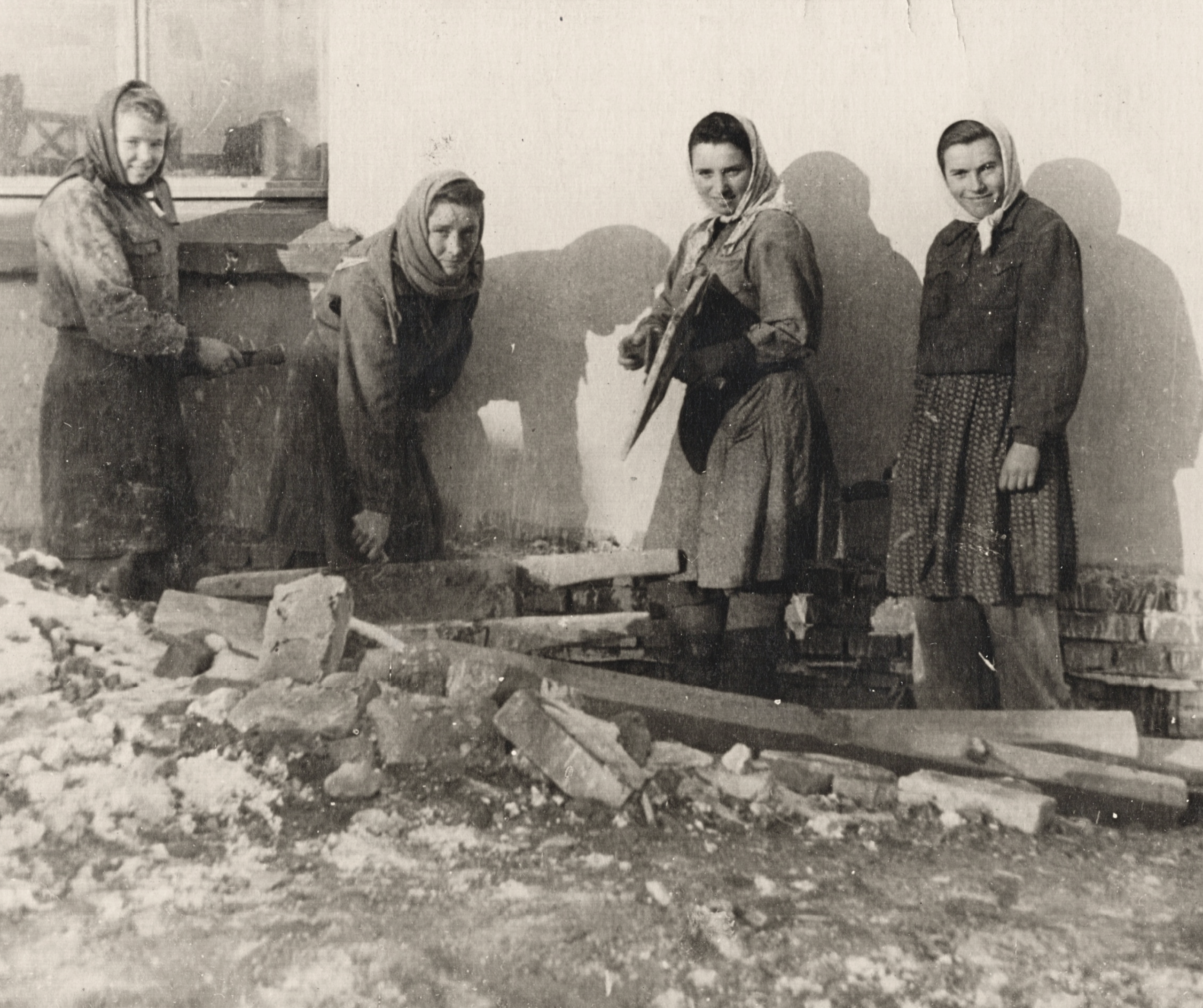
“It is important for people that someone is interested in their history. They can tell their stories. For many, these are things that have remained unspoken,” explains Anna Yatsenko.
The space on Hrebinky Street is a place where private memory gains public visibility.
Last year, it hosted a workshop on vernacular photography. Fifteen participants from different regions of Ukraine shared their collections and practices, while invited experts discussed approaches to research, digitisation, digital archiving, and the restoration of photographic collections.
Open Archive
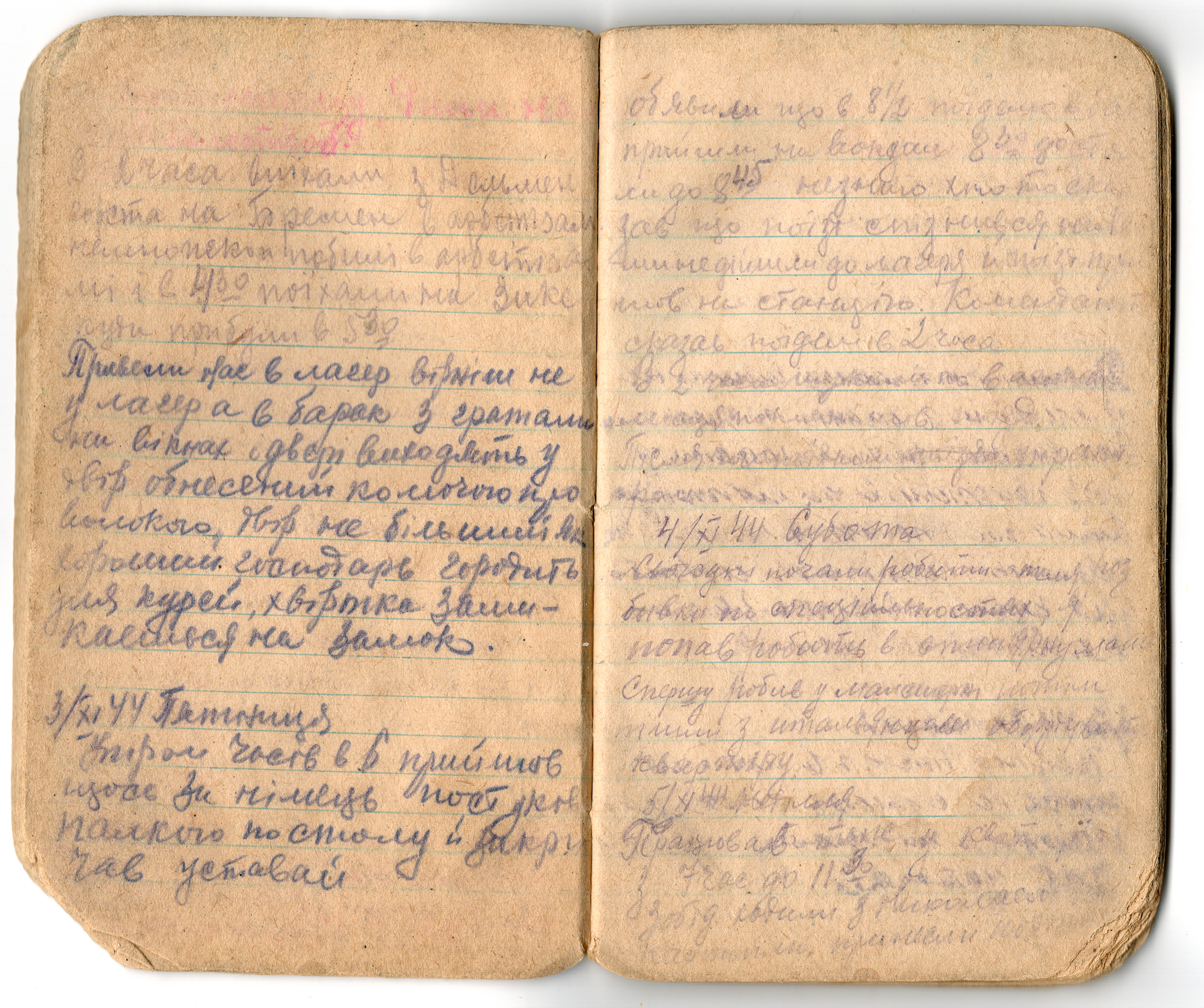
After Silence consciously positions its model in contrast to the closed institutional archive. Materials can be consulted upon request; they have already been used in publications by Radio Svoboda, Bird in Flight, and the documentary video project In Memory. Most importantly, however, the organisation returns people’s own materials to them in an enriched form. A woman who recognised her mouse-chewed album among materials recovered from a front-line area received a flash drive containing scans of all the photographs. People from different regions can send photographs, documents, and other materials by post for digitisation. One such case was the diary of an Ostarbeiter sent by a resident of Sumy. The diary belonged to his father, Oleksii Yatsenko, and is a rich source on the experience of forced labour. The document was scanned and returned to its owner by post the following day.
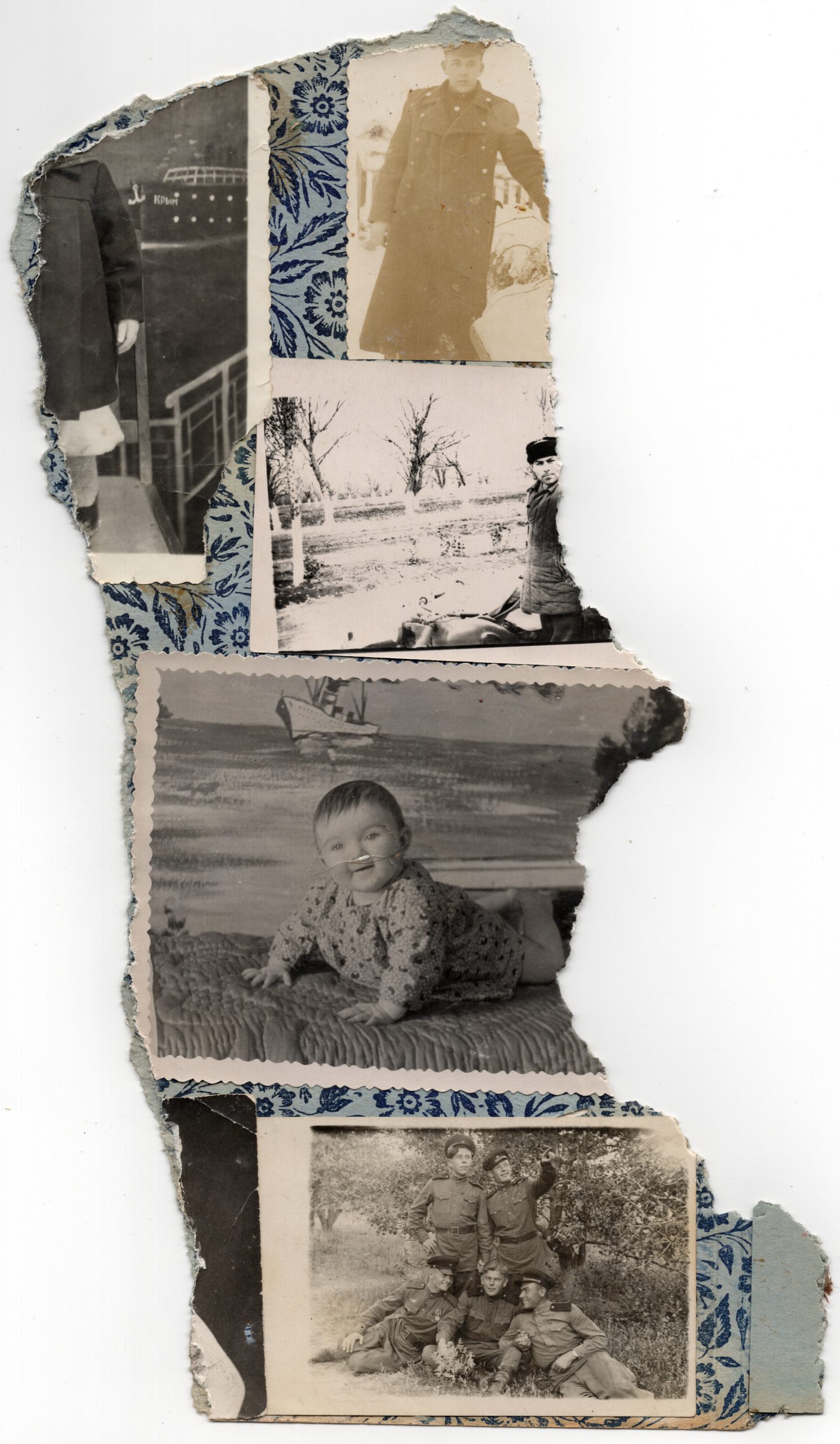
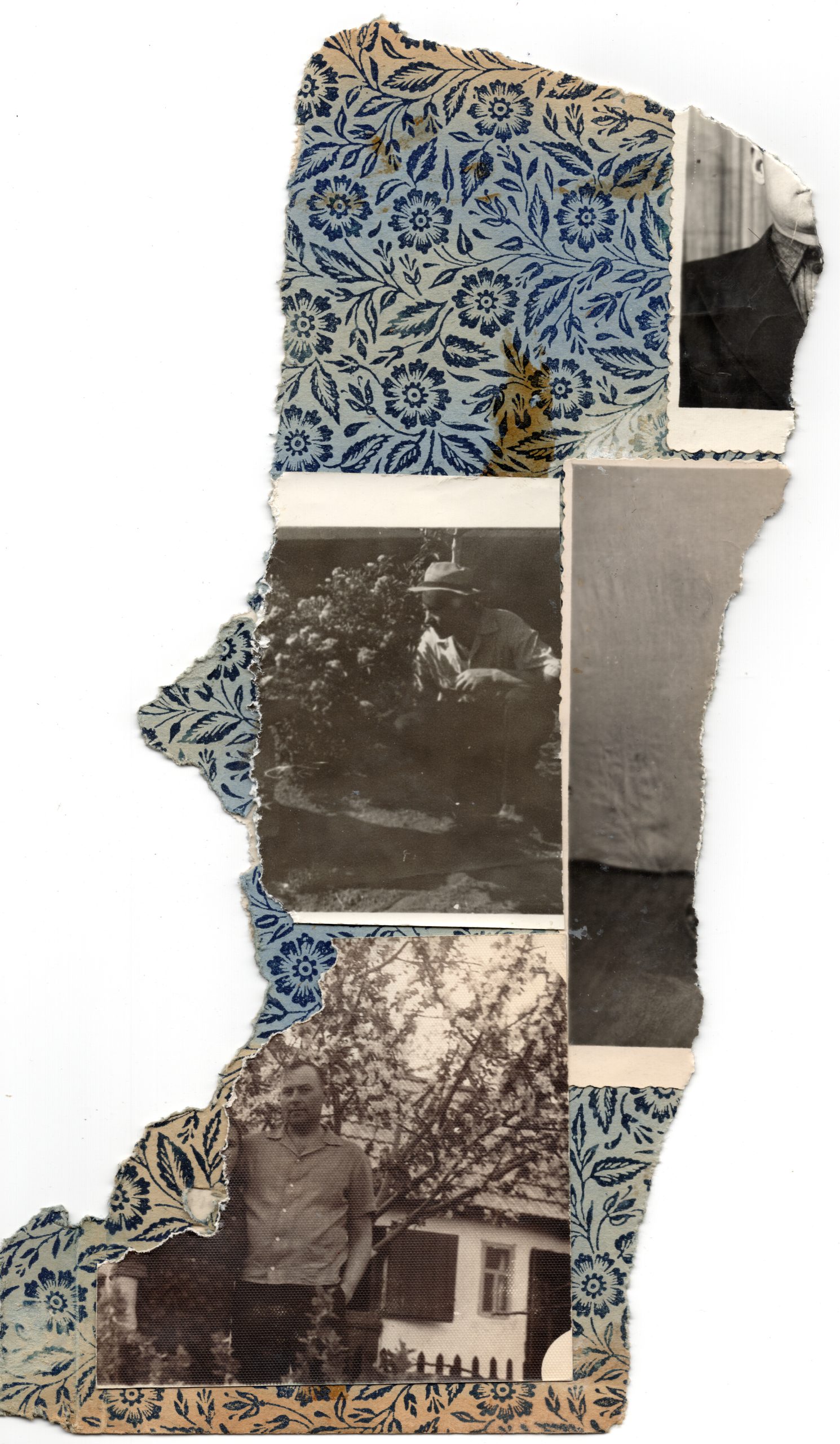
The team regularly advises people who are searching for information about their families. They explain which archives are worth consulting, how to formulate a request, and where to look for relevant information – in state archives, the archives of the Security Service of Ukraine (SBU) and the Ministry of Internal Affairs (MVS), as well as in institutions abroad, particularly in Germany. If the required materials have already been digitised and are available online, the researchers help locate files and obtain copies.
The organisation works closely with international partners. The Arizona Archive of the Shoah – the world’s largest archive of documents relating to victims of Nazism – has received materials discovered during the organisation’s fieldwork in Zakarpattia region. Together with partners in Norway and the University of Luxembourg, the organisation is also working with databases that preserve documents relating to the fate of Ukrainian Ostarbeiter.
The Photograph Registers a Network
The practice of After Silence demonstrates how a photograph becomes a fully-fledged historical source at the moment when context is restored. The materiality of the photograph and the agency of the subject depicted within it create a new layer of meaning, transforming “orphaned” photographs into sources with a (not) hidden biography.
The methodology developed by the organisation shows that photography does not simply capture a moment – it registers a network. Behind every photograph lies a system of connections between people, places, and circumstances. Material characteristics such as the type of paper or the stamp of a photographic studio therefore acquire significance as an additional layer of source material, while an “OST” badge hidden before a photograph was taken can be read as a conscious statement rather than the absence of a visual marker.
Methodologically, the organisation has developed an approach in which identification takes place at the intersection of unrelated collections, local communities, chance encounters, and sources that at first glance do not appear relevant, such as a memoir purchased in a second-hand bookshop, a social media post, or a conversation in a cemetery. The horizon of research may extend over three years and ultimately lead to the reconstruction of an entire network of biographies.
This strategy, which differs from a linear archival search, stands in fundamental contrast to institutional archival practice. Equally significant is the model of the open archive, which returns materials to their owners in an enriched form rather than accumulating them. Private photographic archives have no systematic institutional protection. In the context of war and the physical destruction of archives, the work of After Silence acquires a particular urgency. This leads us to an open question: how can such a practice be scaled up, and how can the protection of private photographic heritage be institutionalised?