The Collection and Stepan Haiduchok
The Stepan Haiduchok Collection, which I would like to discuss here, is dedicated to the culture of physical education in Halychyna in the 1910s–1930s. Through it, I would like to show how photography – sports photography in particular – developed in this part of Ukraine.
To understand the collection, it is important to recognise that during this period sport and physical culture were closely connected with the cultivation of national consciousness, which was particularly important for Ukrainians living in the Polish Republic. The collection comprises thirty albums containing not only photographs but also postcards and documents. They were assembled by Stepan Haiduchok (1890–1976), who, as he recalled, purchased some of the materials from his former student Stepan Rozhankivskyi, while others were donated by families from Halychyna.
Although Haiduchok was not a photographer, he understood the significance of images and the importance of creating an archive. He was a professor of physical education, an activist in the Ukrainian Sokil movement and the Ukraina Sports Society of Higher Education Students, and one of the organisers of the sports movement in Halychyna. He was born in the Lviv region, graduated from the Ukrainian Gymnasium in Lviv and, while still a pupil, became involved in the Sokil-Batko physical education society. This period shaped his views. Under the influence of Ivan Boberskyi, he became interested in the ideas of comprehensive physical education and wrote about them as a publicist in the newspapers Dilo, Novyi Chas and Hromadskyi Visnyk.
He was also involved in the field of health in another way. He studied at the Faculty of Medicine and, in order to finance his studies, taught physical education at girls’ schools. During the war, he served as a junior doctor, according to the album Halychyna. Ukrainian Rally. Based on Materials from the Albums of Stepan Haiduchok. His professional and civic activities shaped his interests as a collector.
Haiduchok wrote ten books on physical education, including Free-Hand Exercises, and researched the history of Ukrainian physical culture. Collecting and preserving materials on the history of civic and sporting life naturally followed from these interests.
The collection is dominated by photographs and is therefore frequently used as a source of historical material and illustrations for the history of sport in Halychyna – a subject researched by the historian Andrii Sova. However, the collection is equally valuable for the history of photography. It allows us to discuss the development of photography as a technology and its use for purposes beyond the realm of art – in publishing, education and the press.
The Community of Photographers
From 1930 to 1939, the Ukrainian Photographic Society (UFOTO) operated in Lviv. It was an association of Ukrainian amateur photographers in Western Ukraine, established to bring together Ukrainian photographers and promote the art and technique of photography. The society published its own journal, Svitlo i Tin (Light and Shadow), organised exhibitions, and almost every photographer who belonged to the society contributed articles to the journal. Reading these texts today allows us to understand the issues that concerned them, the technical challenges they encountered, and the solutions they proposed.
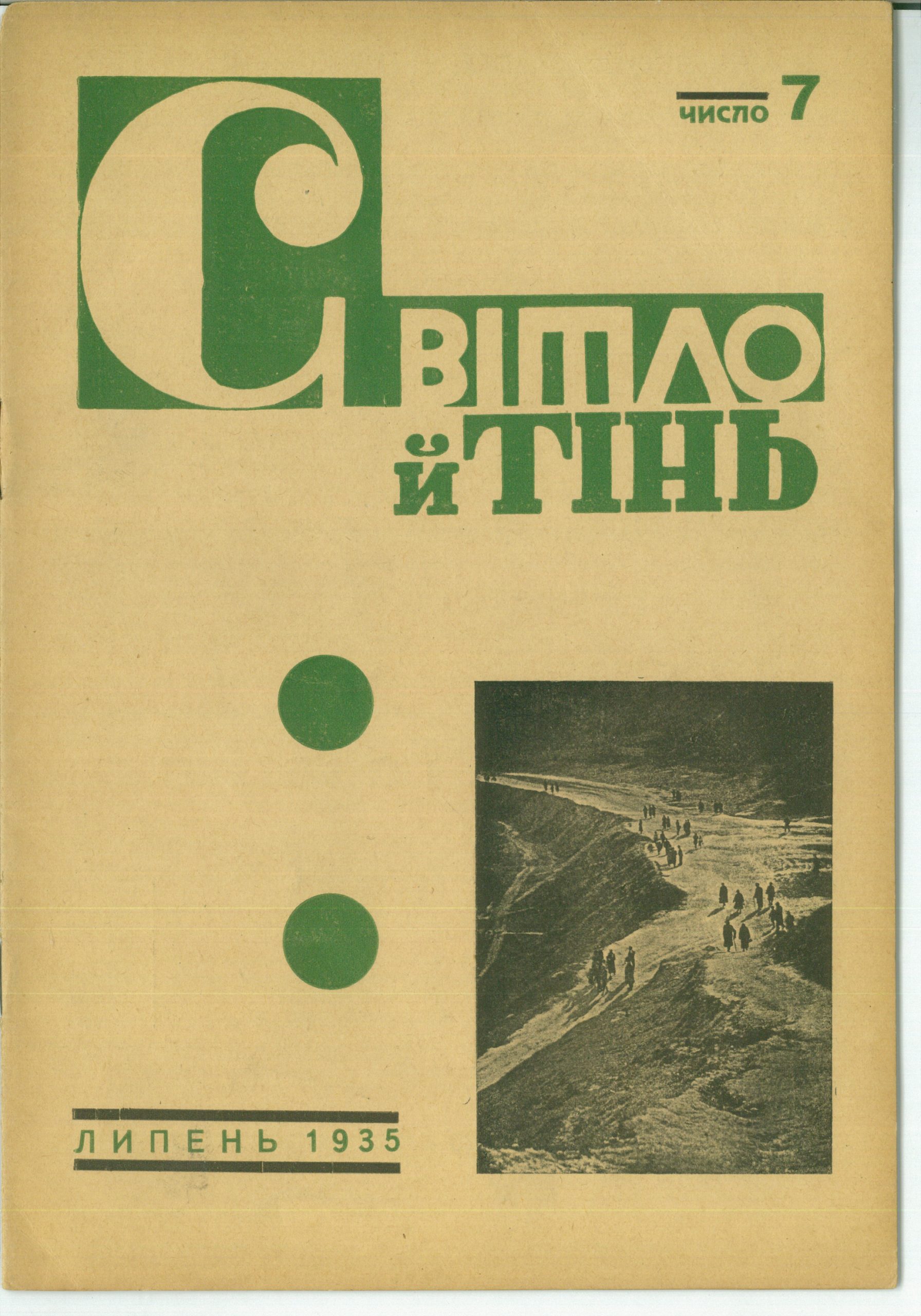
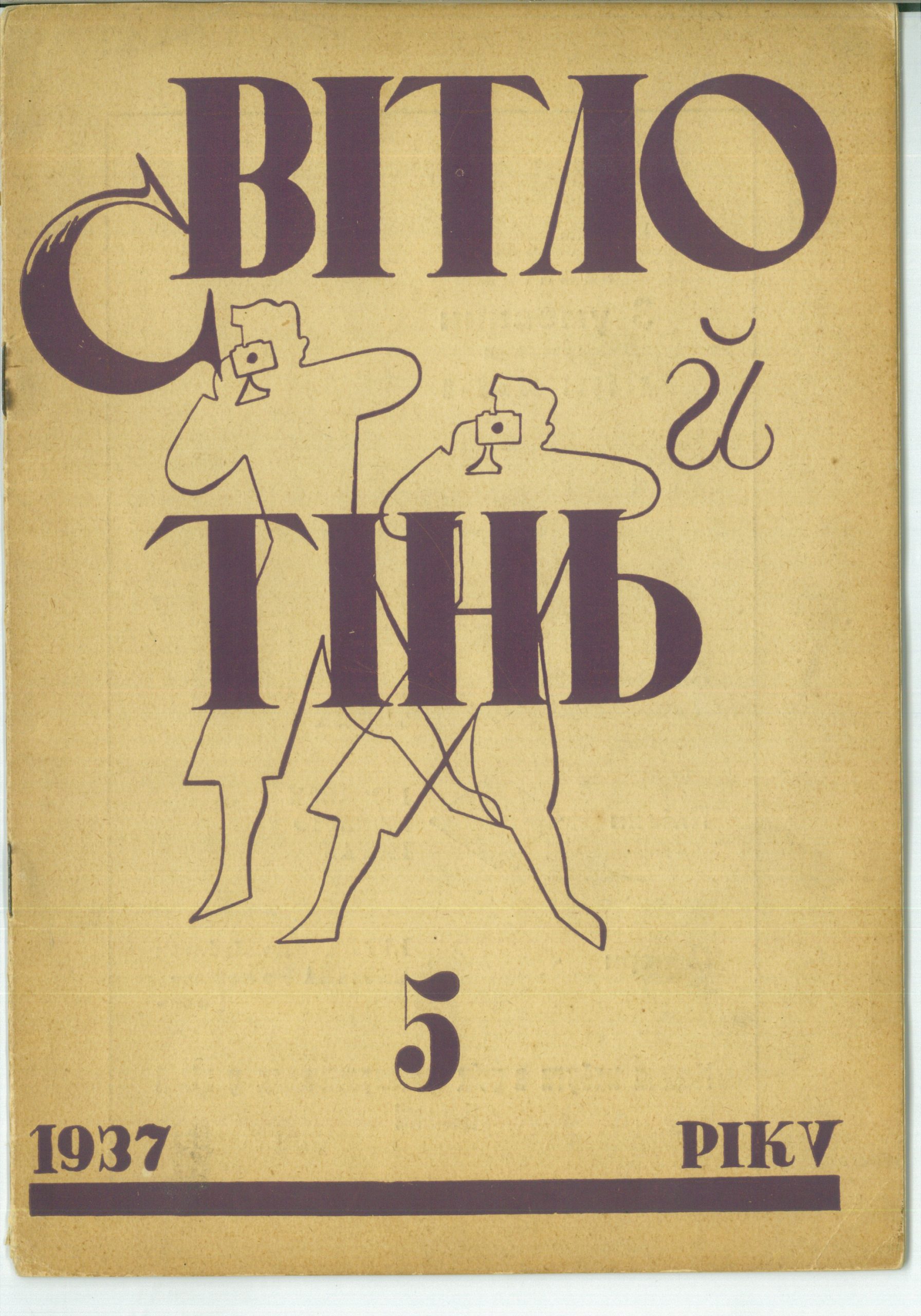
The seventh issue of Svitlo i Tin, published in July 1935, included an article entitled Sports Photography by one of UFOTO’s members, Stepan Dmokhovskyi. Dmokhovskyi was a professional dentist with practices in Lviv and Peremyshl, but he was passionate about photography and actively involved in the community of amateur photographers.
He begins the article by arguing that Ukrainian sports photography did not yet exist, but that it was needed in order to show the beauty of life, encourage physical exercise, and “increase the ranks of those fighting for the health of the Nation.” Similar ideas about the importance of sport appear in many newspaper articles from this period. Since the photographs in the Stepan Haiduchok Collection date from the 1910s to the 1930s, it is possible that Dmokhovskyi was familiar with many of them and drew on them in developing his reflections.
Thanks to Dmokhovskyi, we know the recommendations that guided sports photography at the time:
- use a camera with a focal-plane shutter capable of exposures up to 1/1000 second in order to “capture” rapid movement;
- use a fast lens, as photography often had to be undertaken in poor weather conditions;
- choose reflex cameras or Leica cameras;
- understand the sport being photographed;
- possess “cold blood” – the ability to wait patiently until a compelling moment presents itself;
- obtain permission from the organisers before photographing a sporting event.
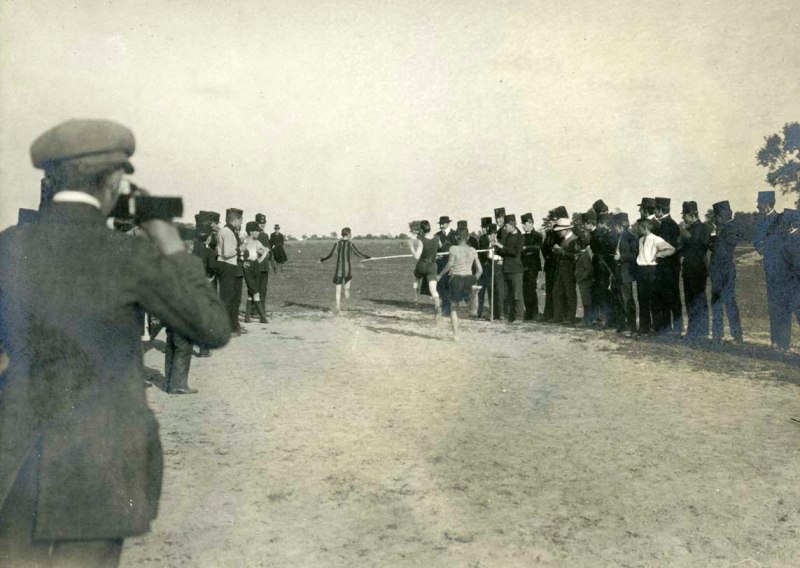
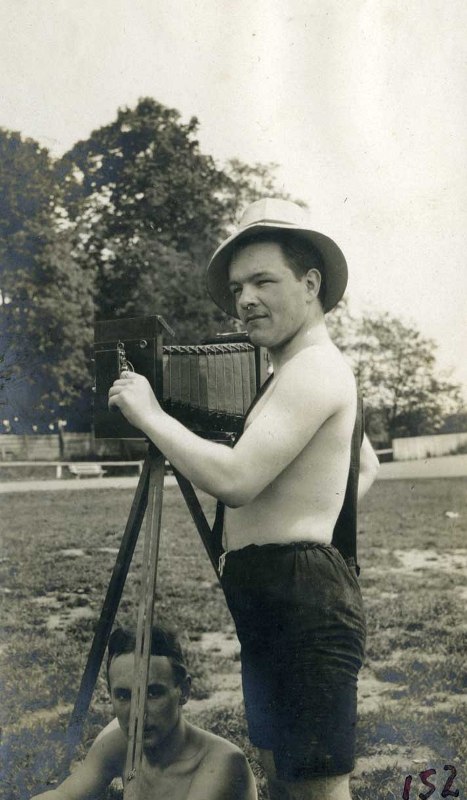
For different sports, Dmokhovskyi also offered more specific recommendations, which will be discussed below. Before turning to the photographs themselves, however, I would like to begin with two remarkable images. They show photographers themselves – people with cameras who so rarely appeared in front of the camera.
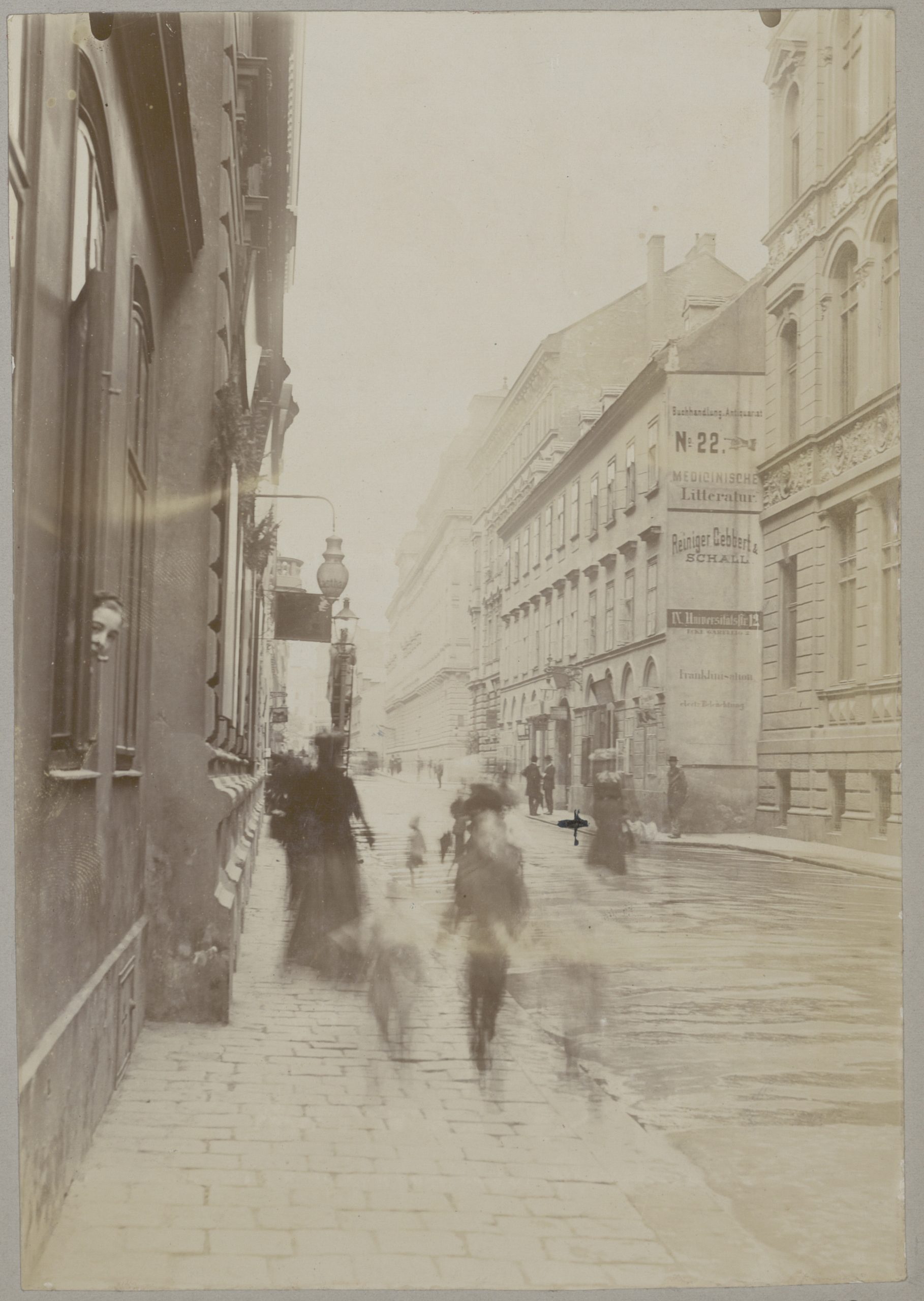
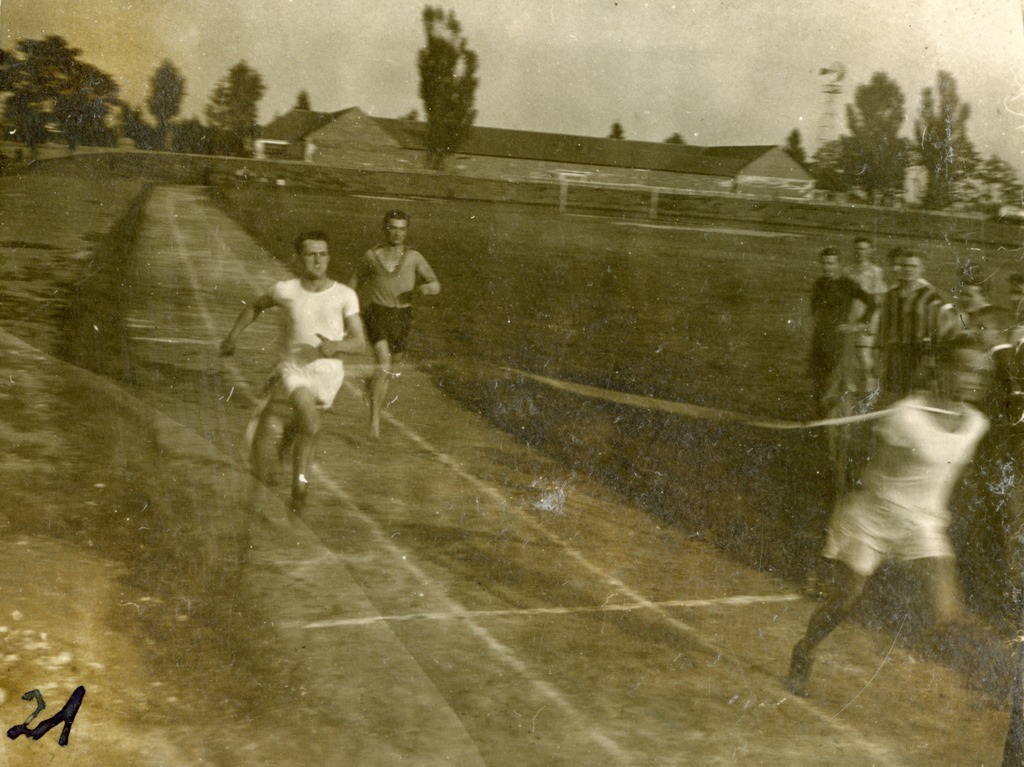
The first photograph accidentally captures a photographer standing in the left corner during an athletics competition in 1910. Although his camera cannot be seen, he has positioned himself at an advantageous point beside the start–finish line.
The second photograph depicts Yaroslav Pasternak. Although he was an archaeologist and wrote primarily on archaeology, in 1912 he published an article entitled What Should an Amateur Photographer Photograph? In it, he argued that photography would become an important source for the study of culture, and therefore photographers should approach it conscientiously – documenting not only festive occasions but also everyday life, while paying attention to the details of the subjects they photographed.
His main focus was ethnography, then a particularly popular field, while sport appears only briefly in the concluding paragraphs: “Public performances, processions, exercises and societies should be photographed. Every society should have its leaders and members photographed every year. Publishing interesting photographs as albums and postcards will generate income and cover the costs.”
Haiduchok shared these ideas. His collection contains precisely these kinds of photographs, and he described one of his albums as follows: “Miscellany. Perhaps it will prove useful in the year 2350 to some patient researcher, artist, film-set designer, or perhaps an ethnographer.”
Iconographies of Sports Photography
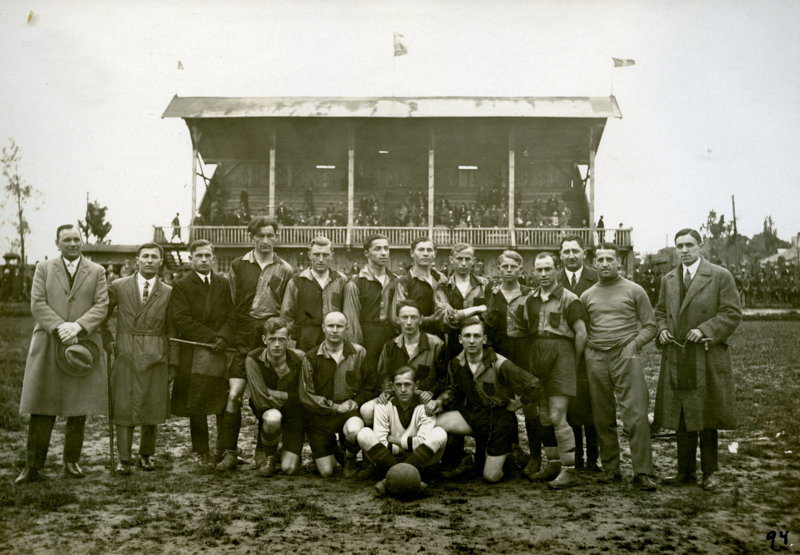
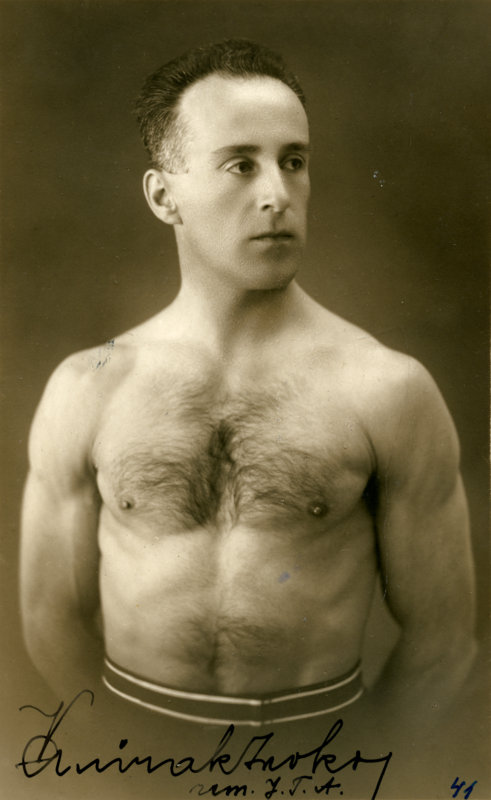
The first group I would like to distinguish is portrait photography. Stepan Dmokhovskyi writes that these photographs “cannot be called purely sports photographs.” Indeed, while they relate to sport thematically, they differ from photographs that depict sporting action.
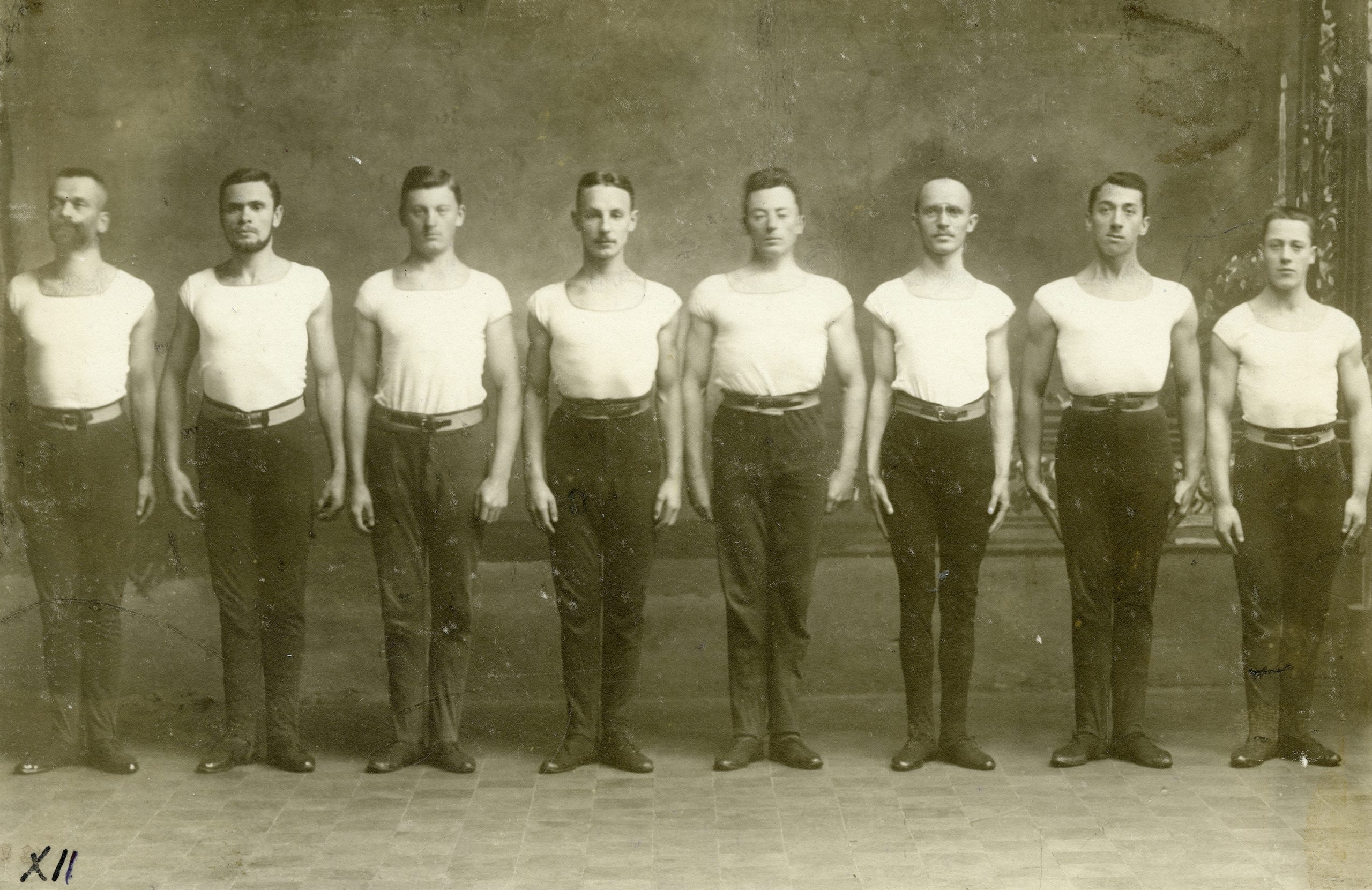
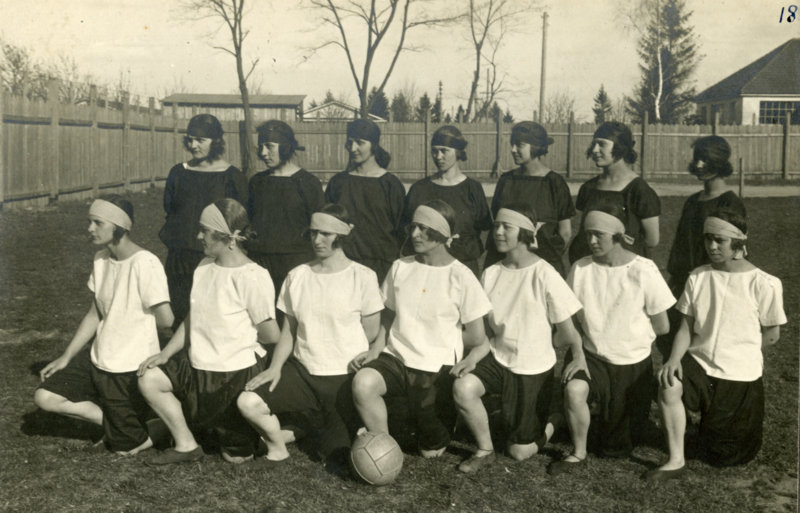
Nevertheless, it was important to produce portraits of teams with their equipment, in uniform, and during sporting events. Such photographs were intended for presentation albums exchanged between societies, for publication in newspapers, and for reproduction as postcards. Today, they allow us to observe trends in portrait photography while also making it possible to study sports uniforms and the influence of contemporary fashion, such as lowered waistlines in women’s athletic dress and the use of embroidery motifs derived from traditional clothing.
Portraits of teams and individual athletes highlighted the beauty and health of the human body, encouraging participation in physical culture.
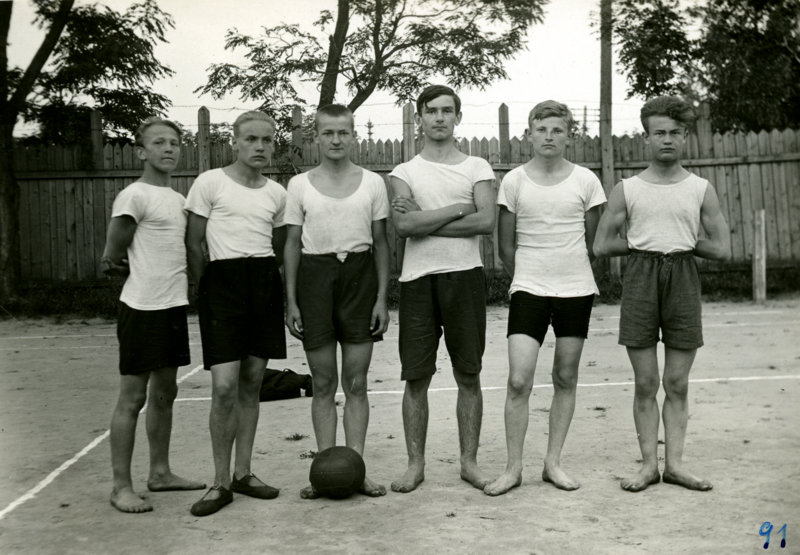
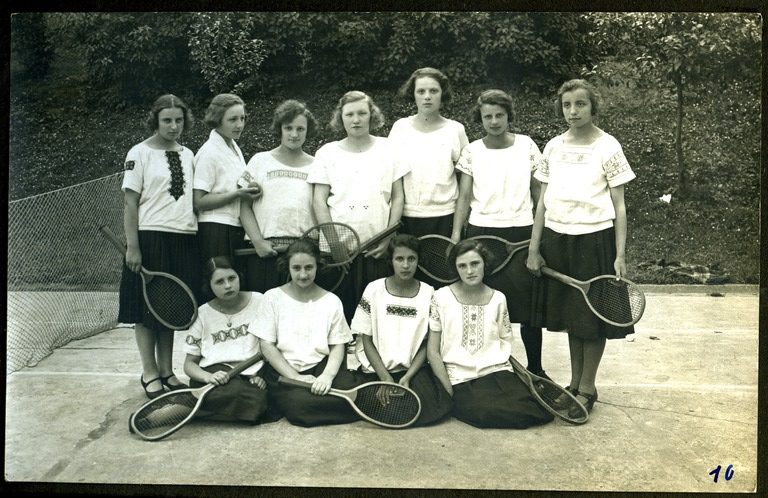
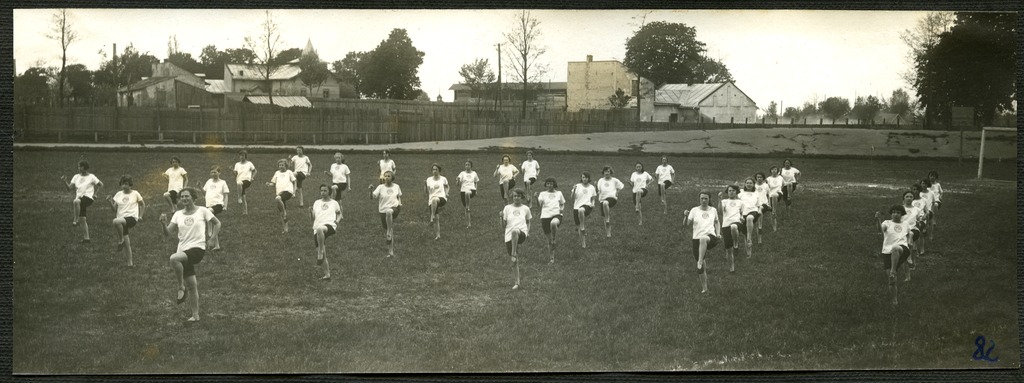
The photographs of women’s teams deserve particular attention. During this period, attitudes towards the female body were changing rapidly, which influenced how it was represented. In photographs of training sessions and public performances, women wear sports clothing equivalent to that worn by men, including shorts and short-sleeved tops, and pose in much the same way as male athletes.
The representation of the female body was no longer purely aesthetic but became one of the instruments of the modernisation of society.
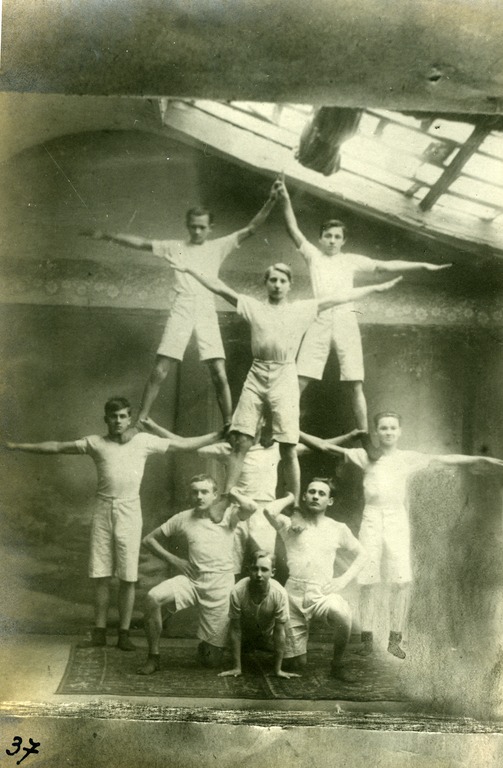
Another group of sporting subjects consisted of the so-called vezhi (“towers”), as they were known in Halychyna. These multi-level symmetrical pyramids, combining elements of collective gymnastics and strength acrobatics, were popular among sports, gymnastics and Sokil societies from the late nineteenth century until the first half of the twentieth century. Towers formed an essential part of large Sokil rallies, demonstrating the strength, agility and discipline of Ukrainian youth. They were performed both before audiences and specifically for photography, as their static nature made them particularly well suited to being photographed, even in studio settings.
The Haiduchok Collection contains photographs of towers of varying complexity, while Haiduchok’s captions provide additional insight into their characteristics. The tower shown below, for example, was designed by Teofil Ostapiuk, head of the Sokil society in Ternopil. Haiduchok later incorporated Ostapiuk’s designs into his manual One Hundred and Three Towers, published in 1925.
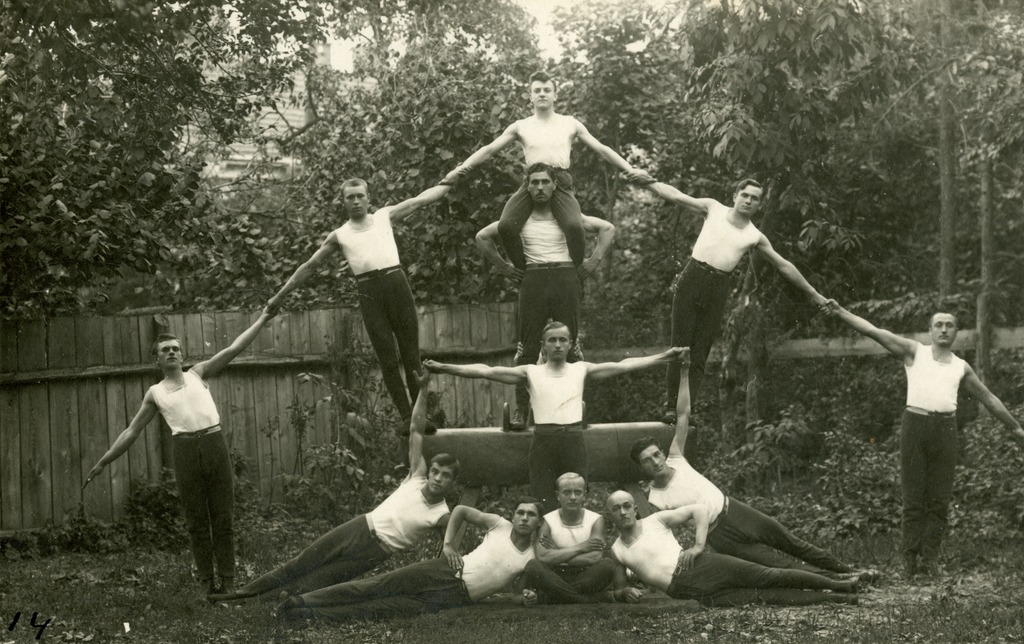
The following photographs depict increasingly complex male and female towers, but it is also worth paying attention to the format of the photographs themselves, which has been carefully cropped to emphasise the shape of the towers. Their compositions are highly considered, focusing on symmetry and physical tension. Trees, grass and foliage create a neutral background against which the contrasting clothing of the participants is rendered with particular clarity.
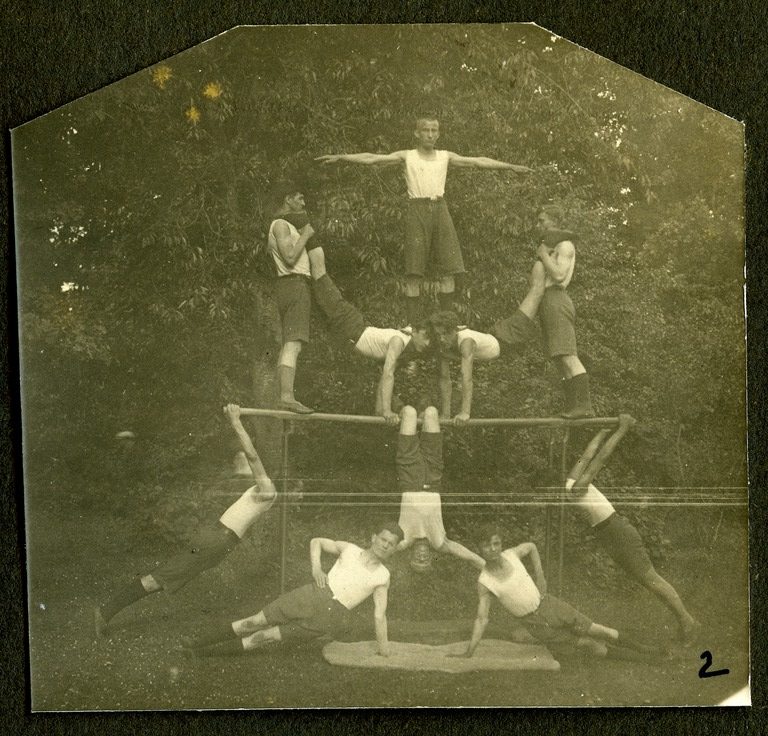
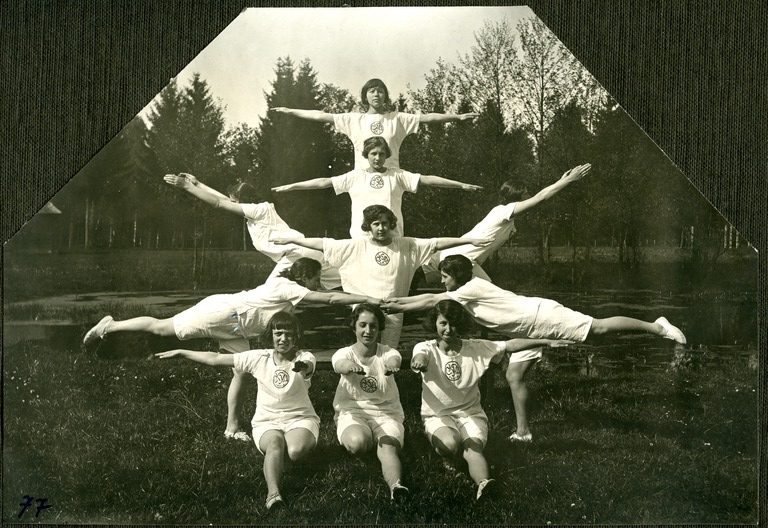
Studio photographs of towers share many of the same characteristics, although they generally contain fewer details because of the more limited lighting conditions. Several of these photographs bear the stamp of the Marion photographic studio, suggesting that commercial studios photographed much more than conventional studio portraits. Another series of tower photographs offers a rare glimpse into the interior of a photographic studio. Because the tower was too tall to fit against the painted backdrop, it was photographed directly beneath the glazed roof lantern, while the studio backdrop itself remains visible in the background. Within the context of sports photography, this is simply one of many photographs of towers, but it is particularly valuable because it reveals the internal organisation of a photographic studio.
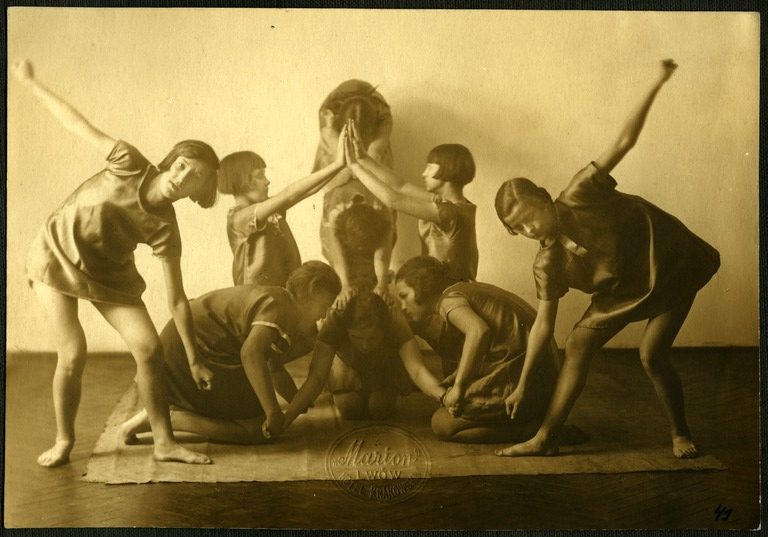
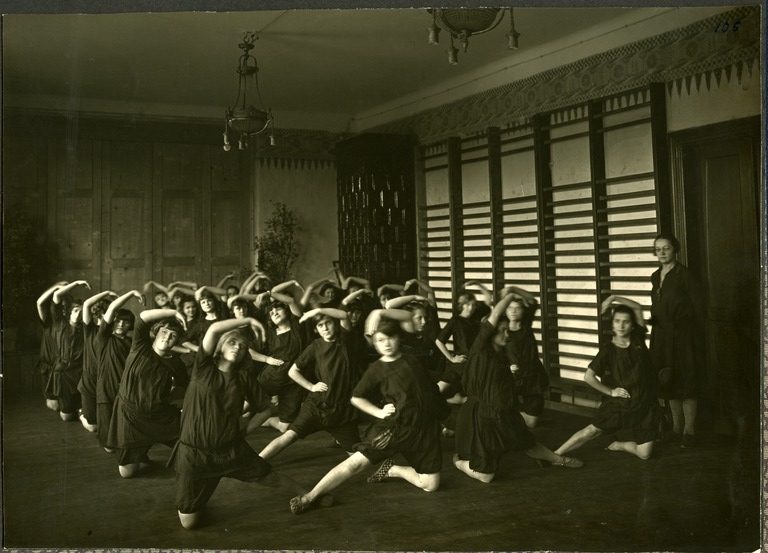
Similar ideas of agility, discipline and collective coordination were also expressed through photographs of public performances during Sokil rallies and sports festivals. These mass gymnastic displays were known as free-hand exercises (vpravy vilnoruch). Participants performed synchronised movements either without equipment or using clubs, wreaths or embroidered towels. Photographs of these exercises are often remarkably sharp and detailed because photographers could prepare their equipment in advance from a fixed position, while the sequence of movements was known beforehand. This differed considerably from team sports, where the action unfolded unpredictably. The compositions of free-hand exercise photographs emphasised the precision and harmony of movement and were frequently taken from a wide viewpoint to convey the scale and visual impact of the performances.
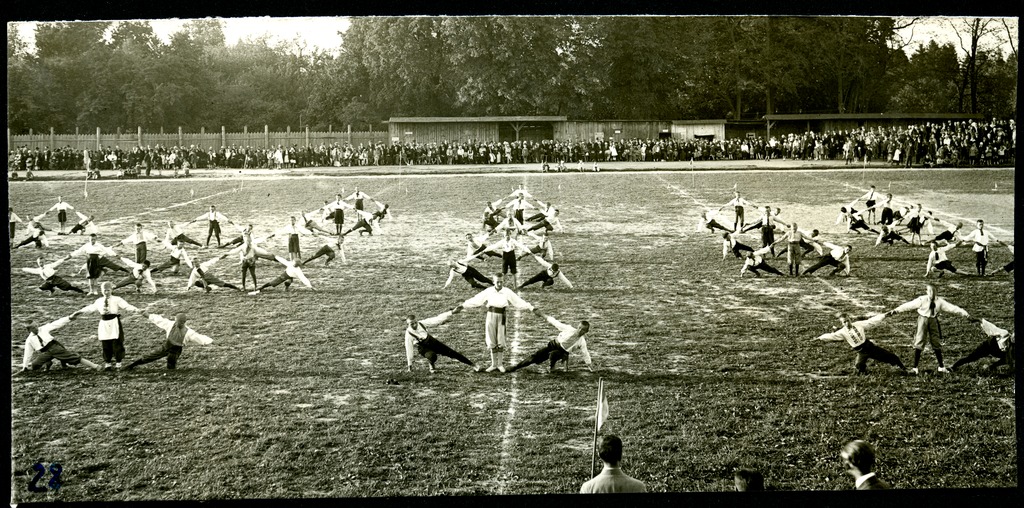
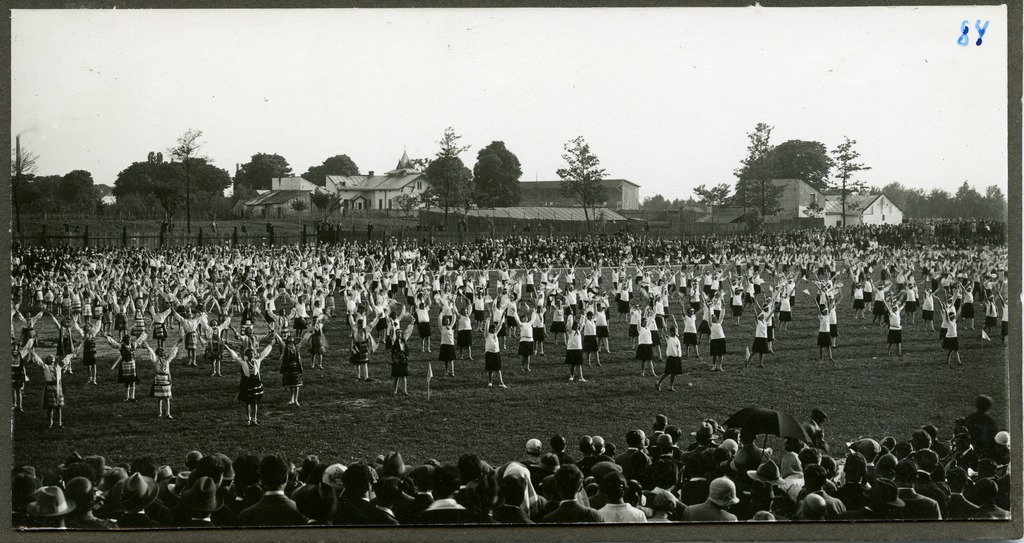
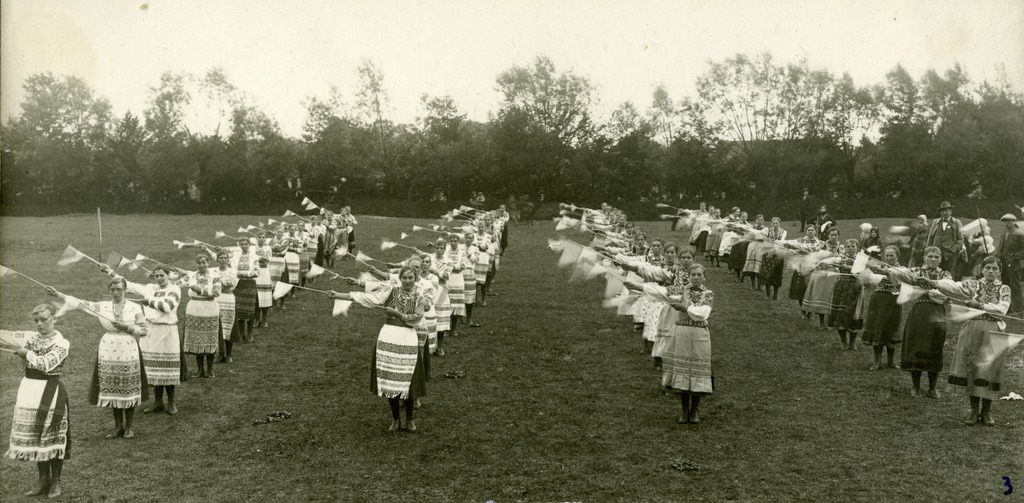
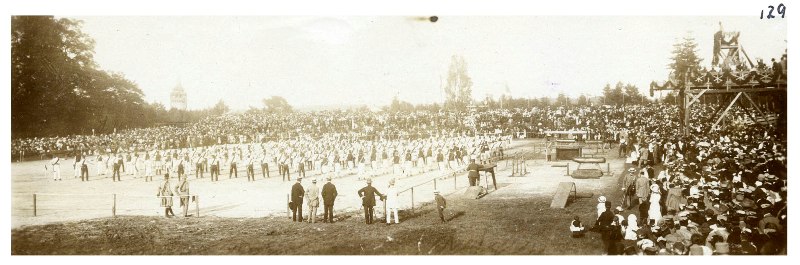
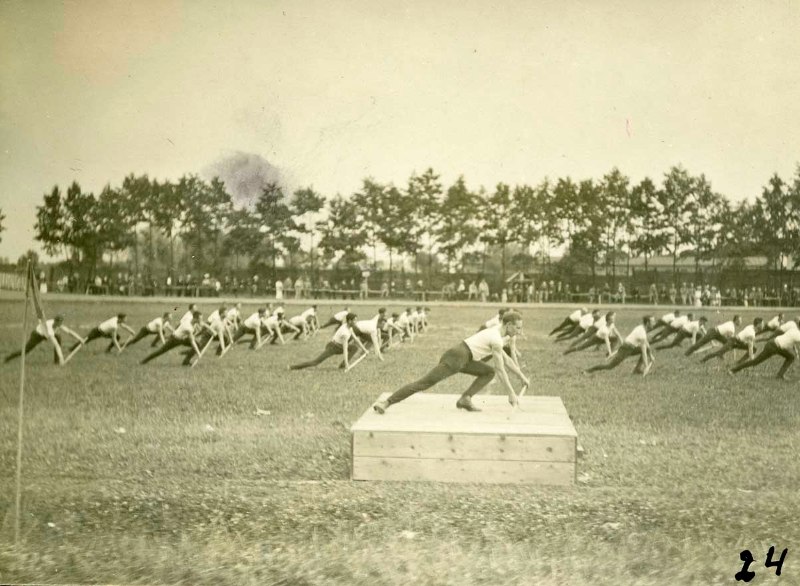
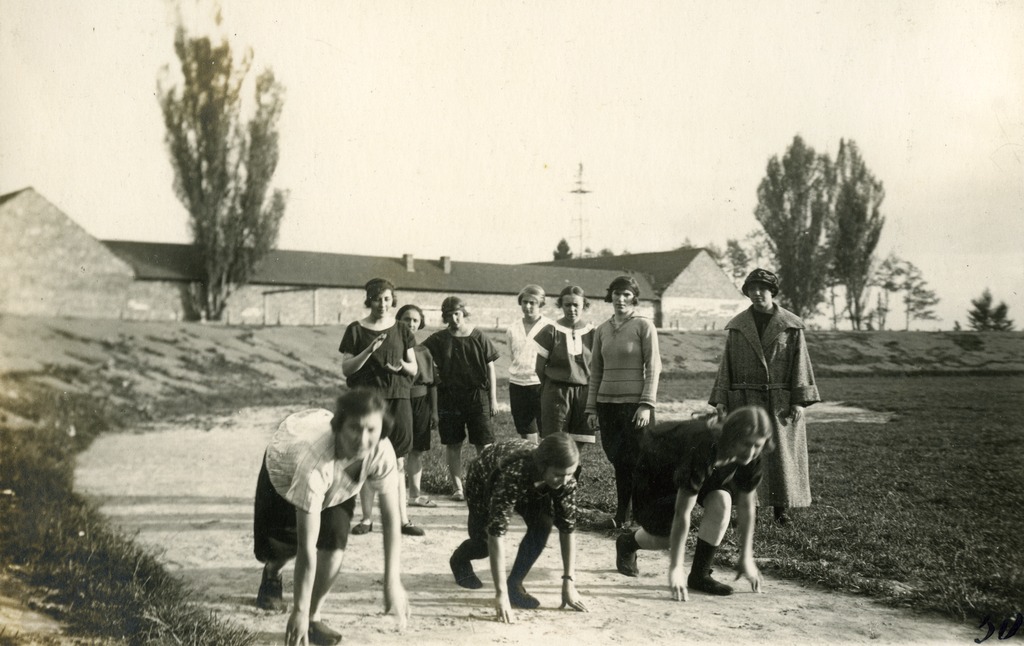
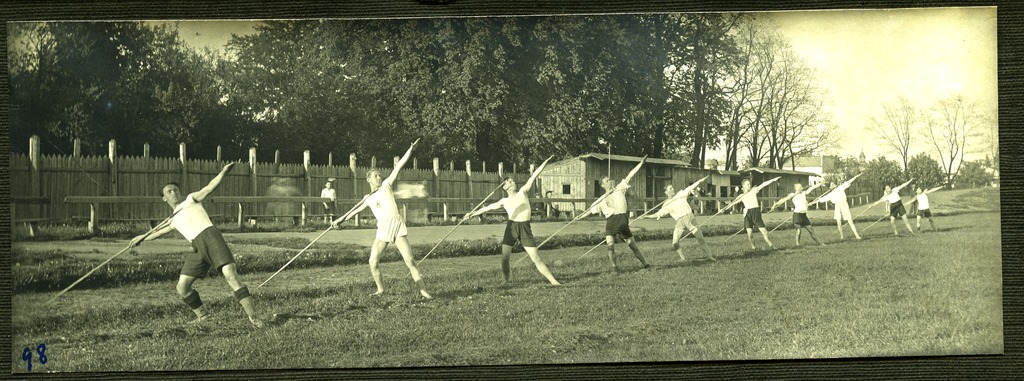
Like towers, free-hand exercises also lent themselves to staged photography. In the photograph below, members of SKUD deliberately pose during athletics training in the summer of 1927.
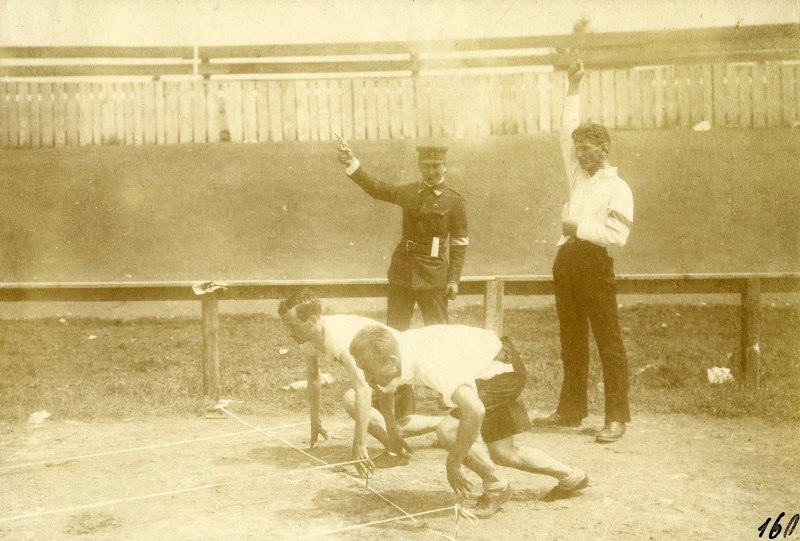
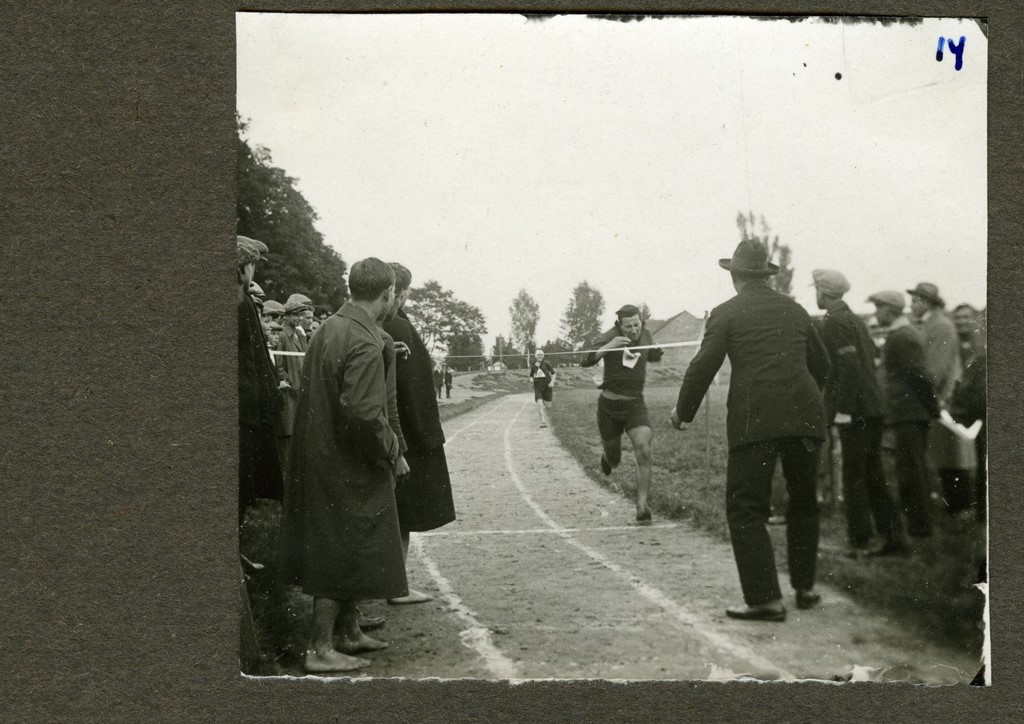
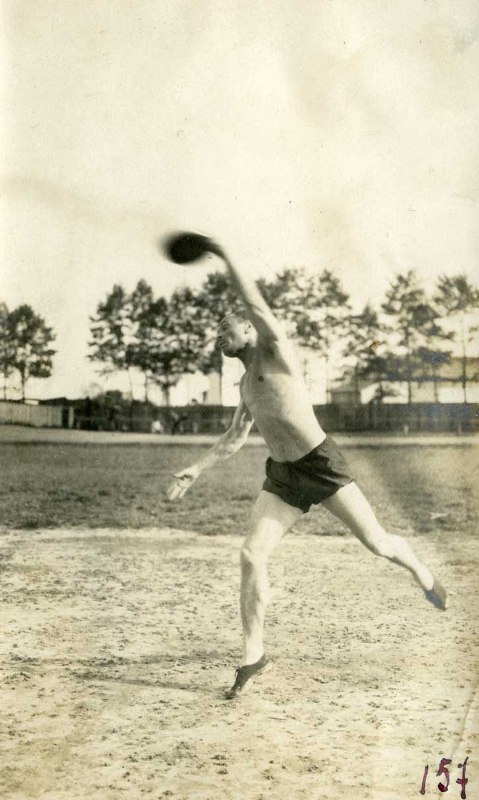
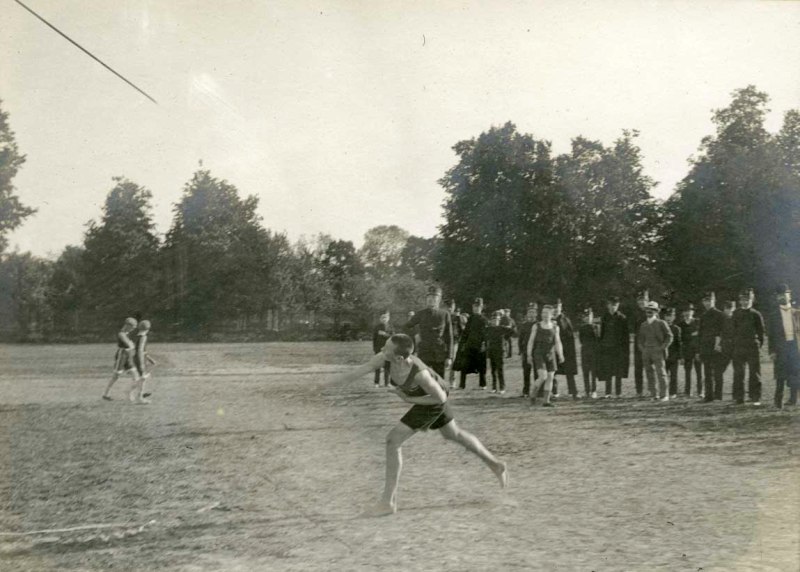
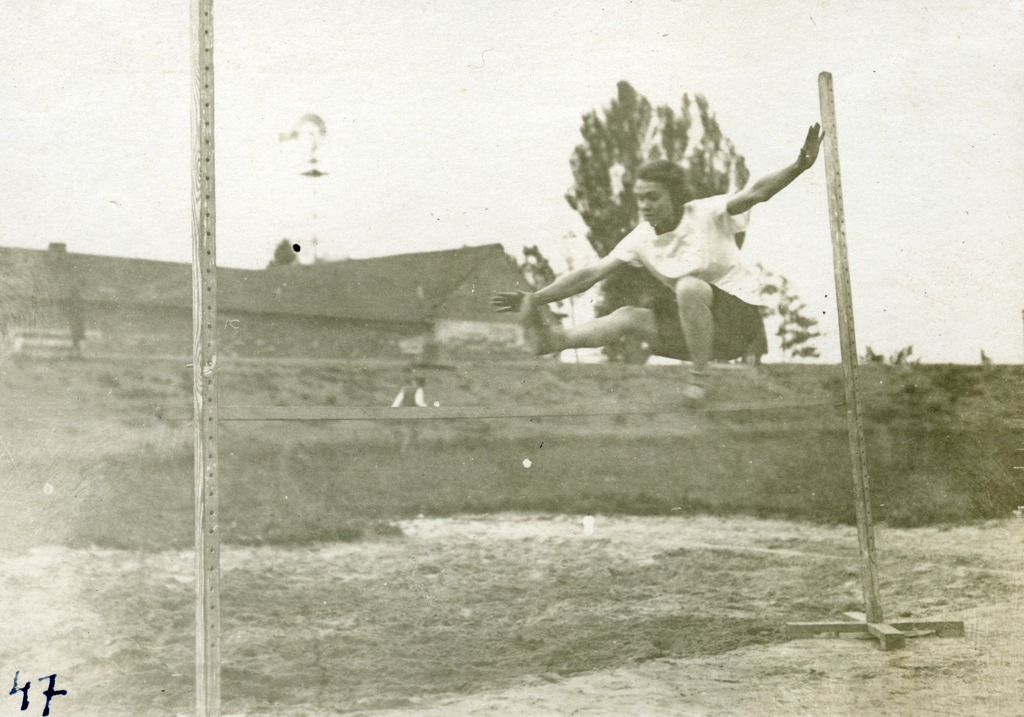
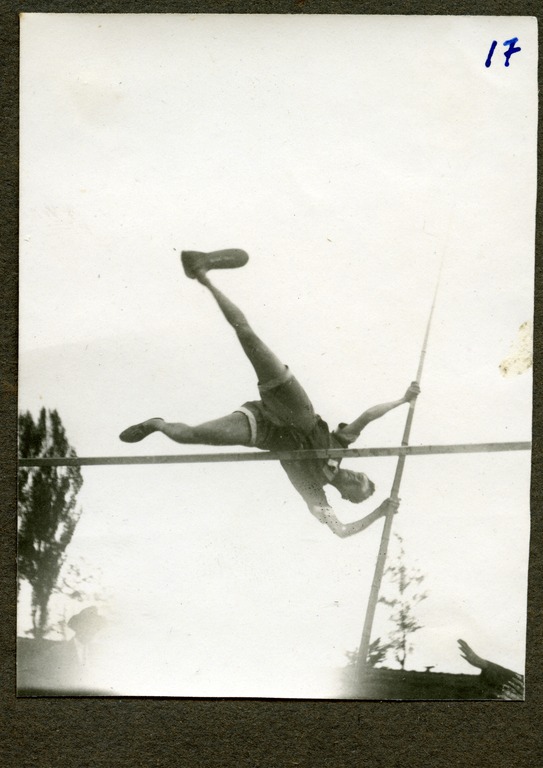
The next category in terms of photographic difficulty was athletics, including javelin throwing, discus throwing, running and jumping. At these competitions, photographers knew the sequence of events and could choose their position in advance, but they still had to capture the most compelling moment with sufficient sharpness, which was far from easy.
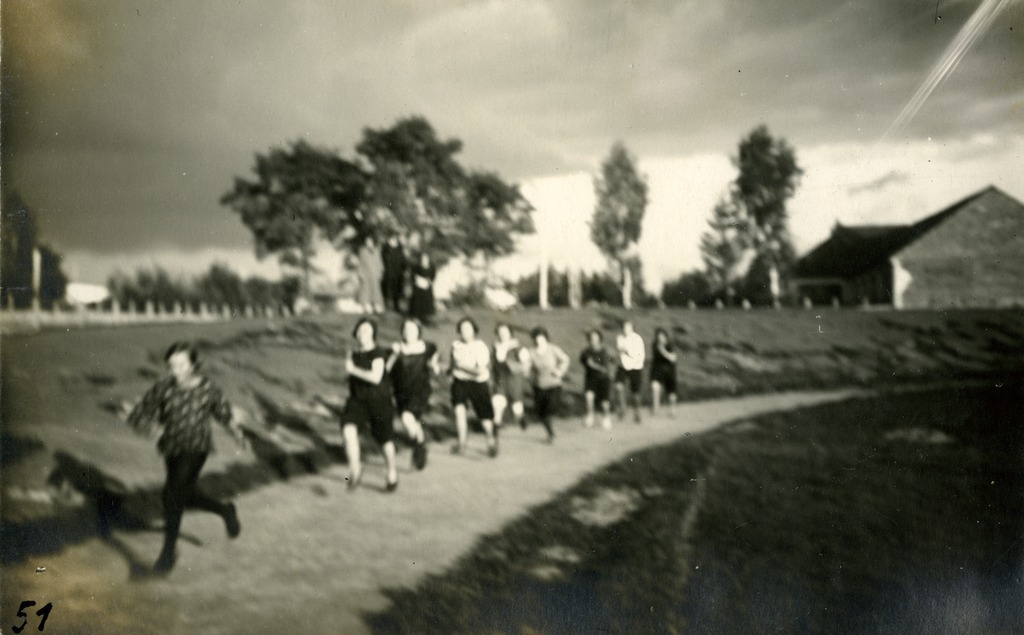
Stepan Dmokhovskyi described these as “purely sporting” photographs. Their compositions share a similar visual rhythm, as photographers attempted to capture the moment of greatest physical tension. For running events, he recommended photographing from a position seven to ten metres away and diagonally to the starting line. He also advised photographing both the start of the race and its conclusion, when one of the runners reached the finish line.
Javelin and discus throwing also influenced the format of the photograph, which was generally framed horizontally or vertically according to the direction of movement. Some images were taken with a wide angle that included the field, spectators and coaches, whose stillness accentuates the athlete’s dynamic movement.
The following photograph clearly illustrates the technical limitations of photography at the time. The athletes remain perfectly still while posing for the camera, whereas the spectators in the background continued moving and therefore appear blurred.
Stepan Dmokhovskyi regarded team sports as the most difficult subjects to photograph because photographers could not predict when or where the most compelling interaction would take place. He emphasised that successful sports photography required a thorough understanding of the game itself, while also offering practical advice. Above all, he recommended learning to photograph athletes in motion during training sessions, where there were fewer restrictions. When photographing football matches, he advised taking up a position ten to twenty metres from the goal, as this was where many of the “dramatic scenes” unfolded in rapid succession. In volleyball and basketball, he considered moments when the ball was in the air to be the most significant. It was also important to work with short exposure times, for which Dmokhovskyi recommended cameras fitted with shutters such as the Compur, which became increasingly popular during the 1920s and 1930s.
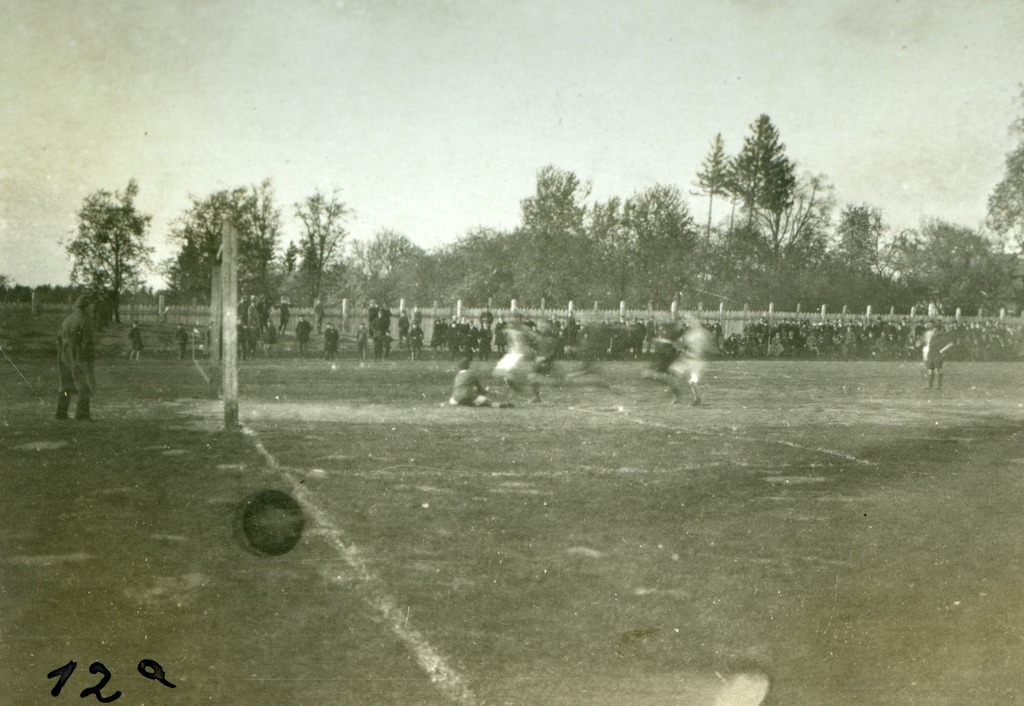
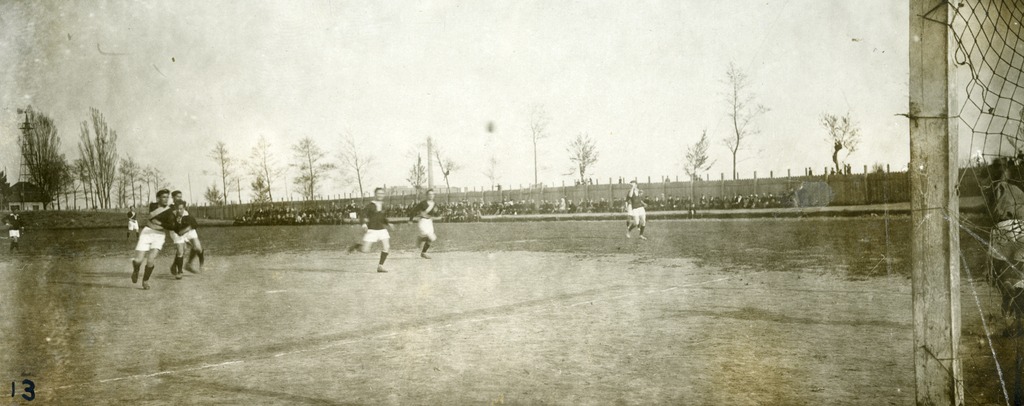
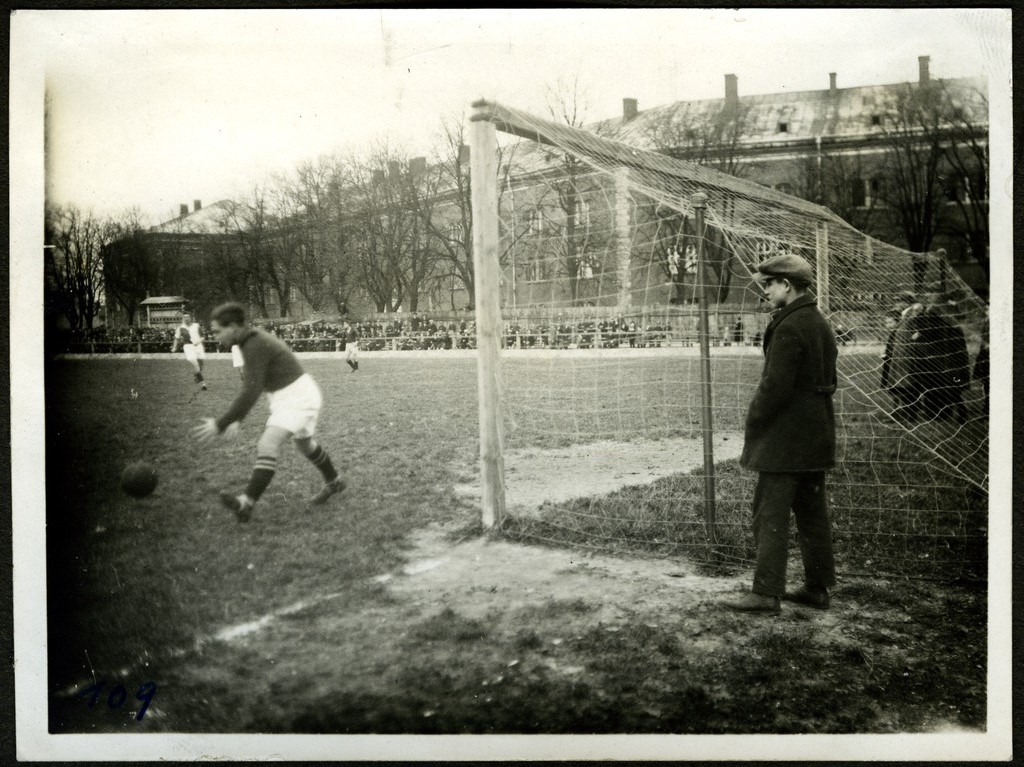
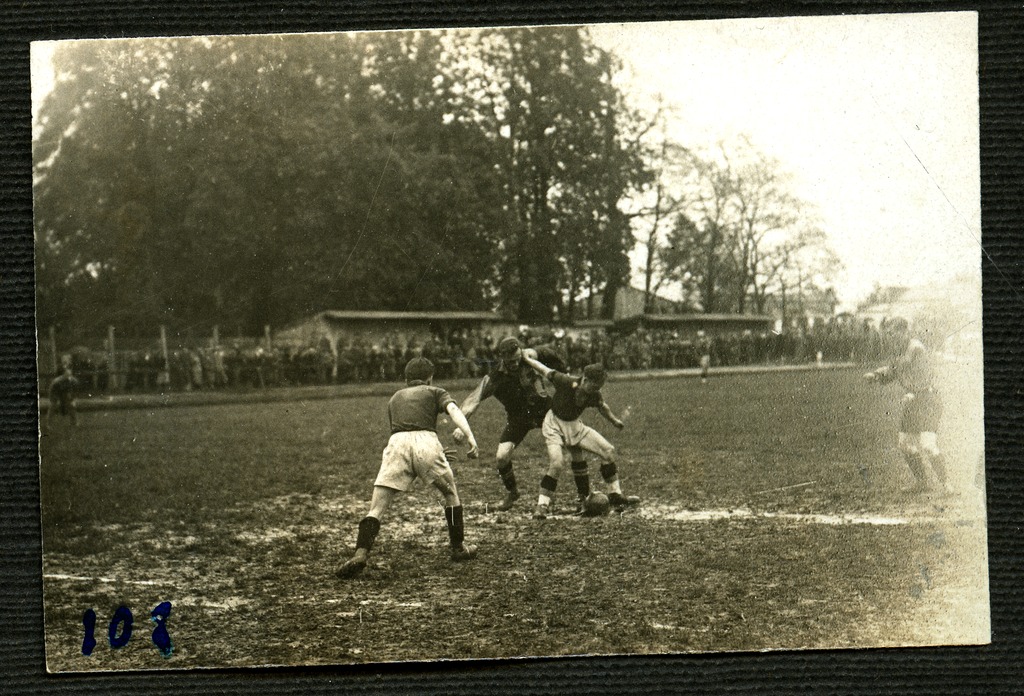
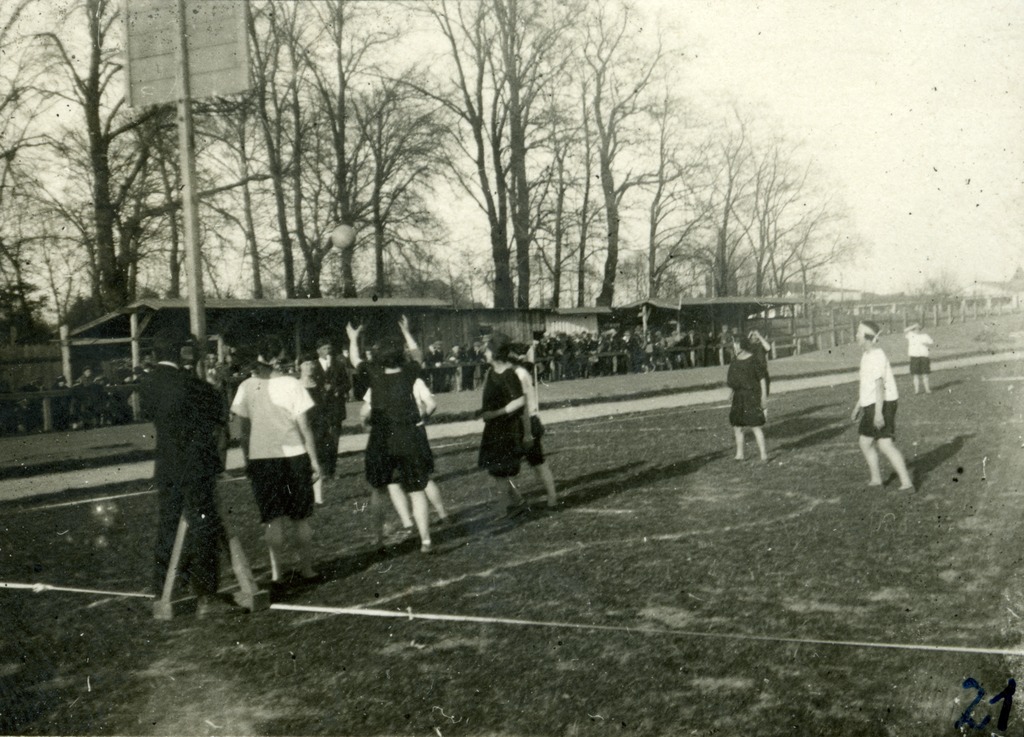
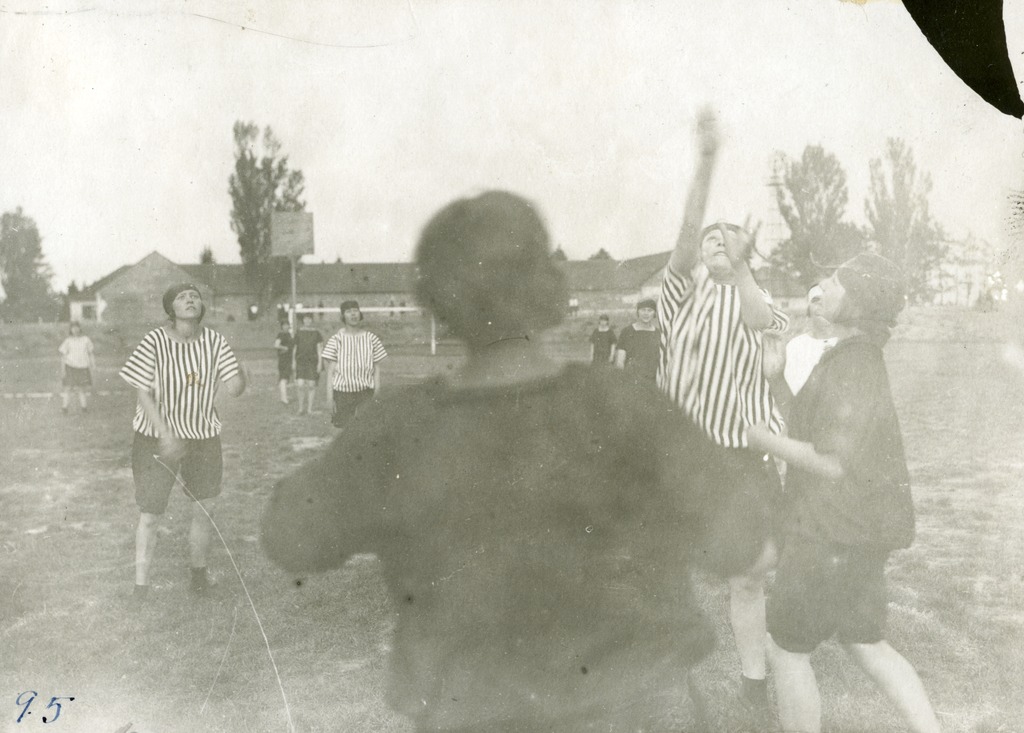
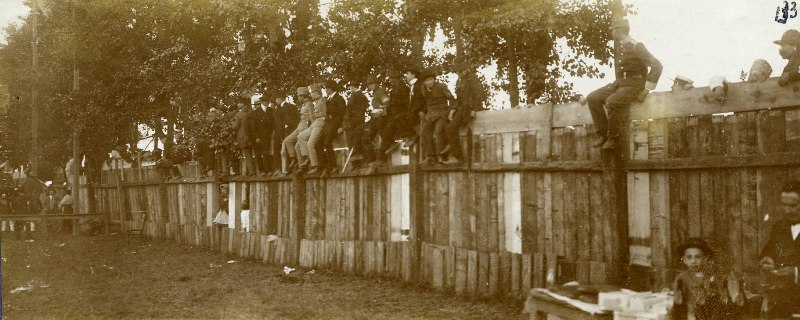
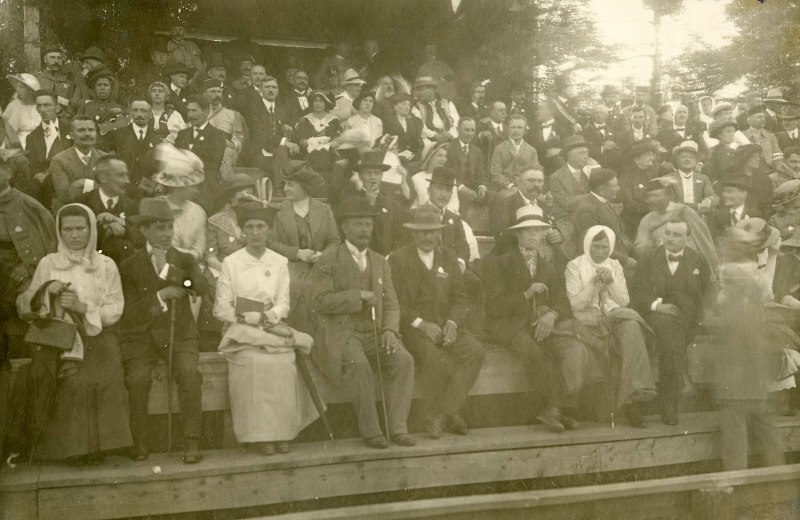
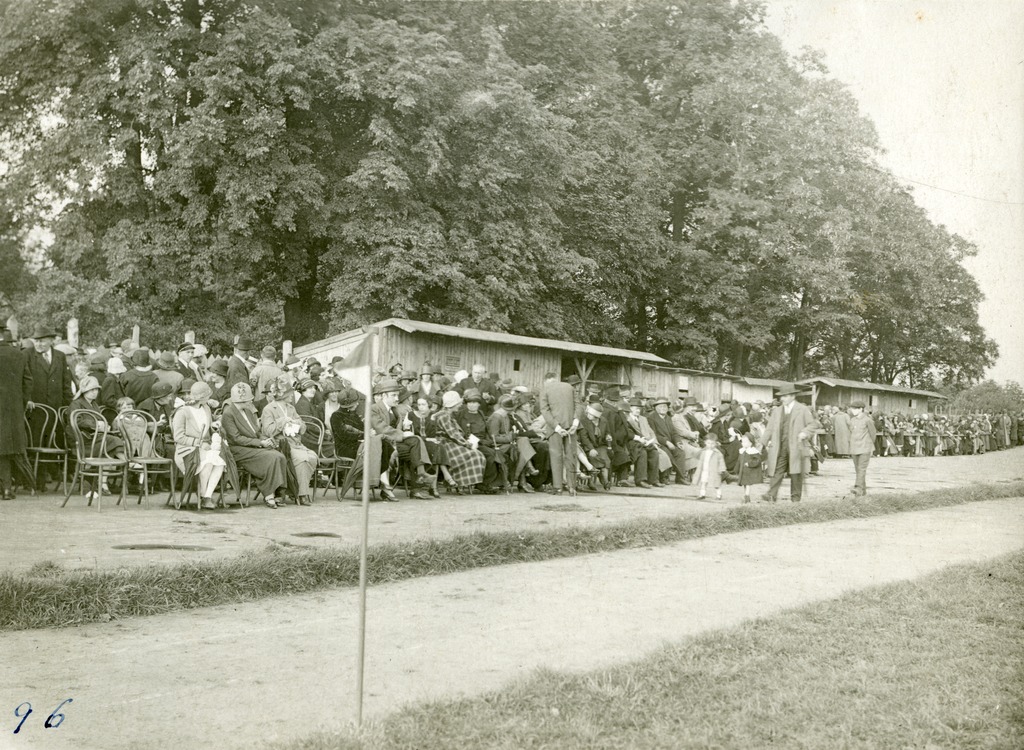
The contemporary press frequently discussed the importance of spectators at sporting events. Newspapers described their reactions during matches and competitions, pointed to large audiences as evidence that an event had attracted considerable interest, or, conversely, criticised the public for indifference, laziness and a loss of interest. Photographers likewise paid close attention to spectators, attempting to convey both the size and the diversity of the crowd.
Where These Photographs Were Used
As Yaroslav Pasternak recommended in his article What Should the Amateur Photographer Photograph?, sports and gymnastics societies reproduced photographs as postcards. Their sale helped raise funds for purposes for which financial resources were lacking, including the purchase of sports equipment and even the acquisition of land for sports grounds. The Haiduchok Collection includes such postcards depicting a Sokil gymnastics performance in Ternopil and a Sokil rally in Lviv.
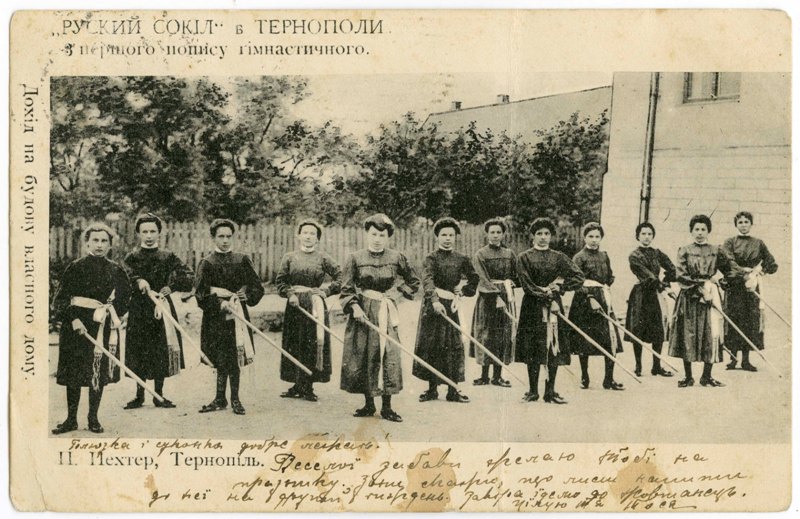
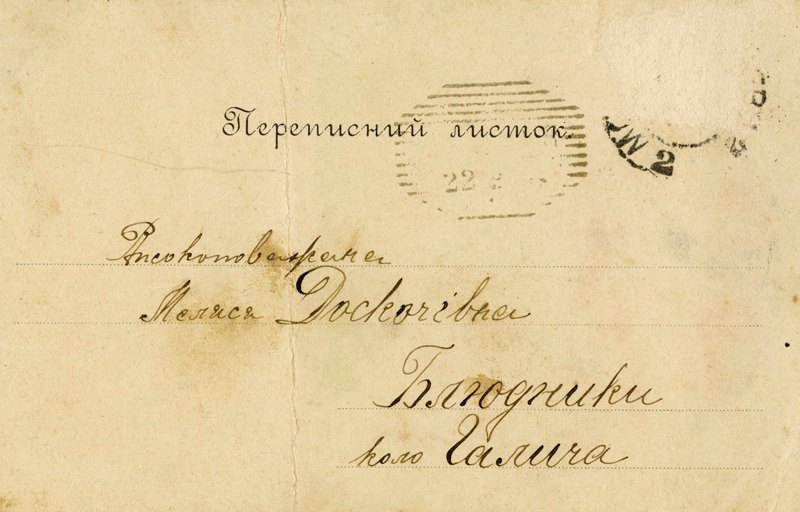
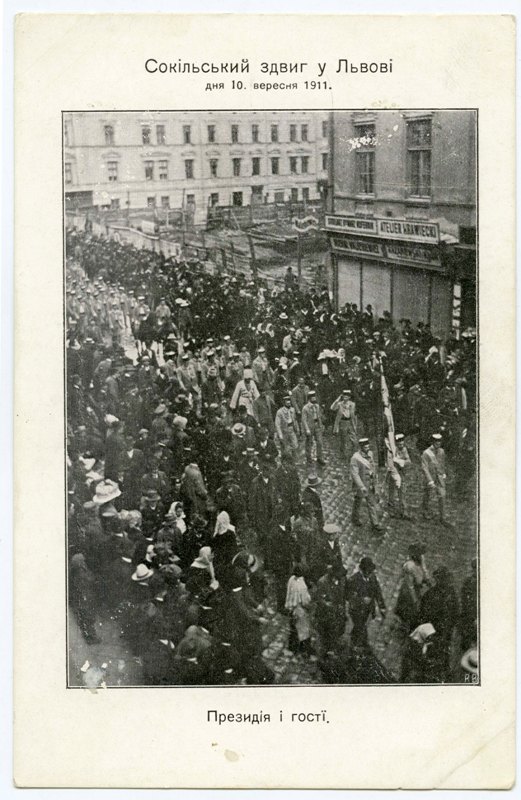
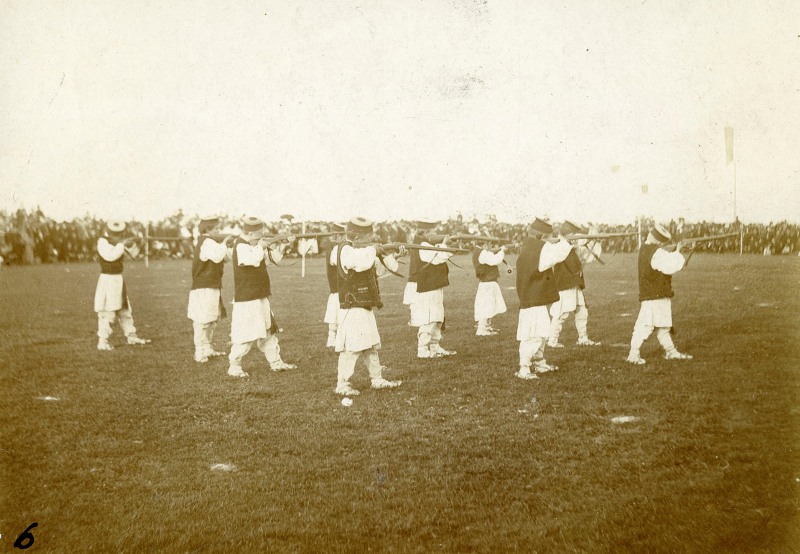
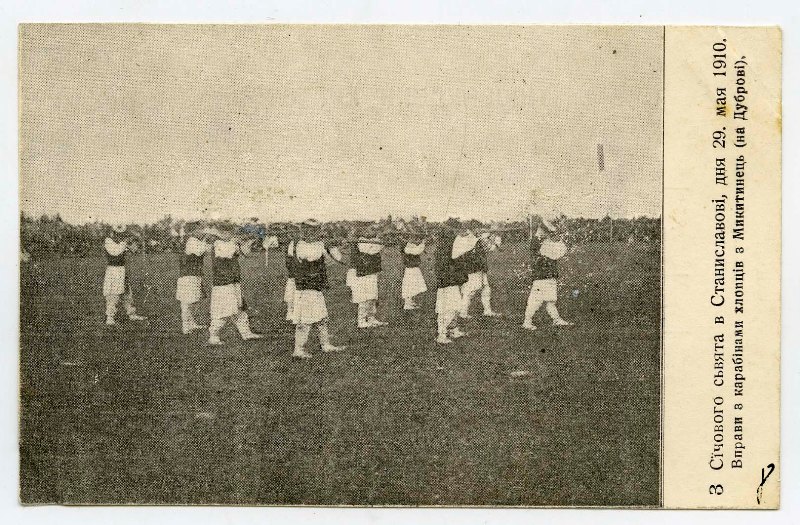
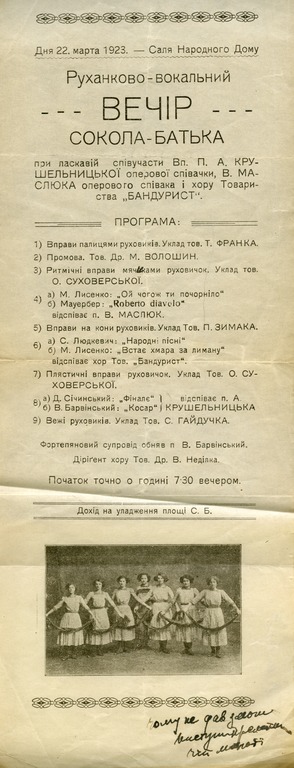
Photographs were also reproduced in periodicals, where the lower quality of printing resulted in a loss of detail, as well as on invitations and posters, which were similarly ephemeral and therefore did not require highly detailed reproduction.
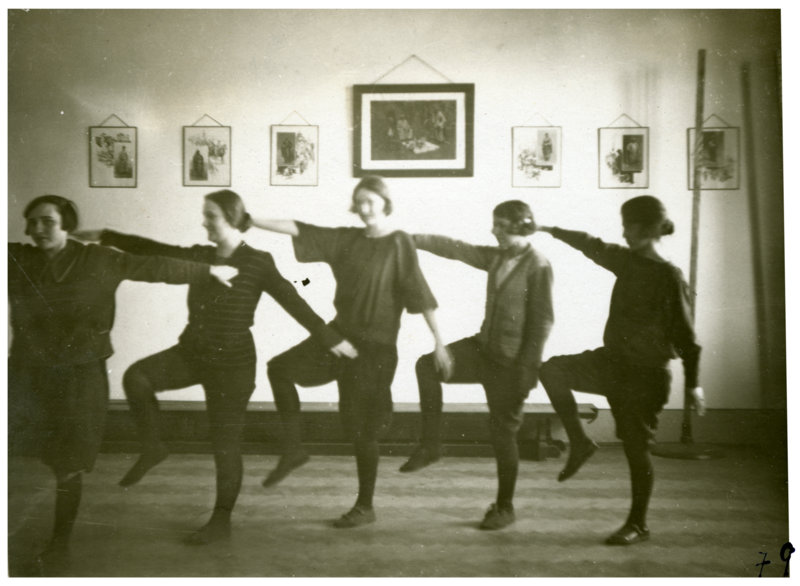
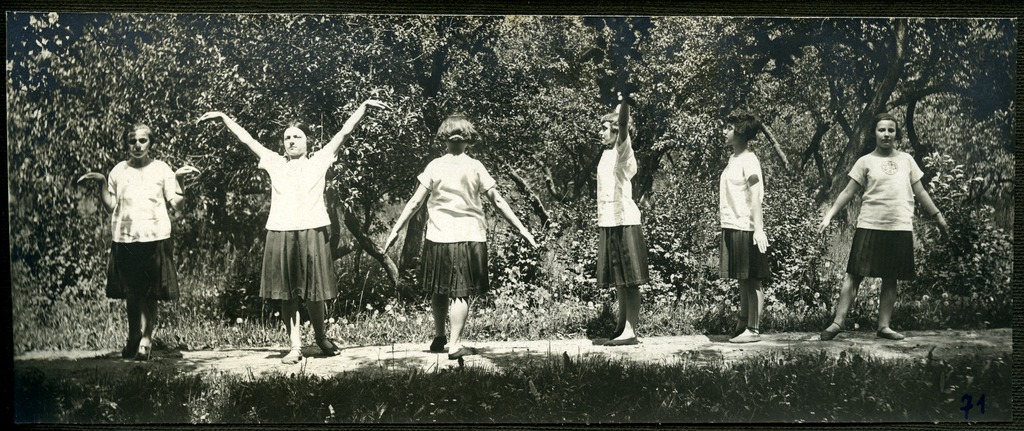
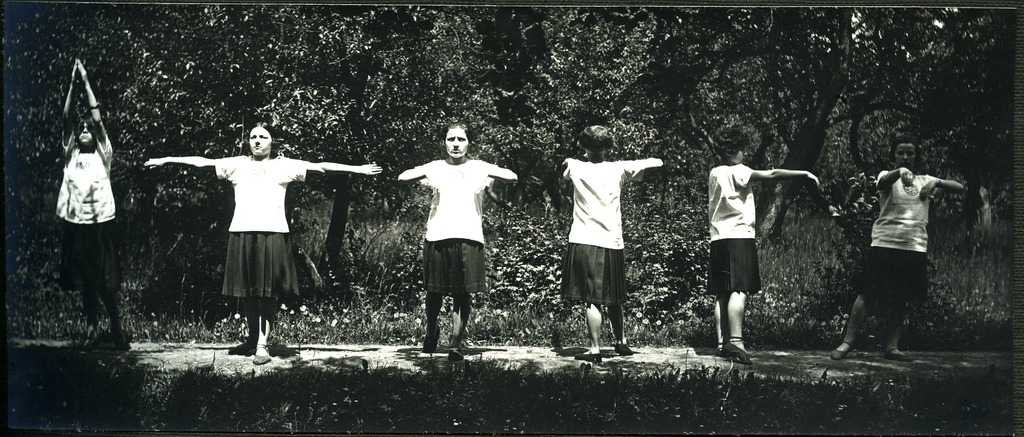
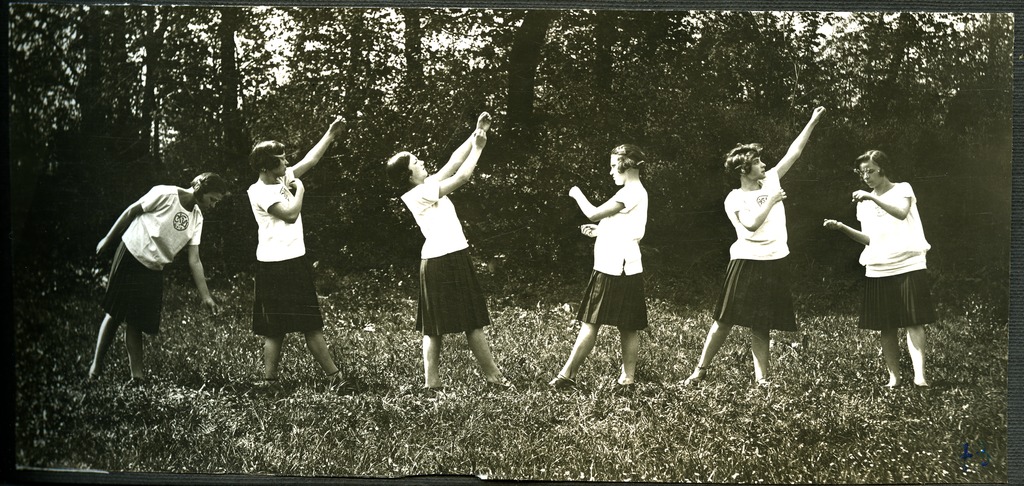
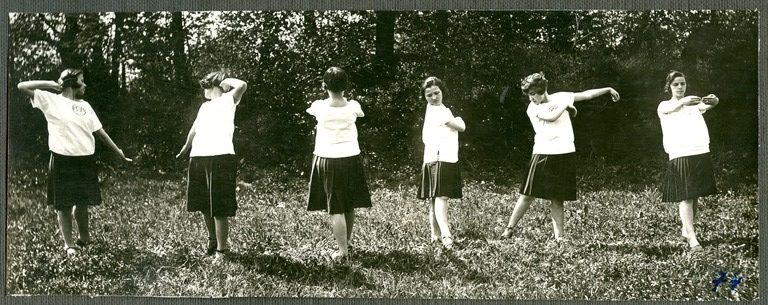
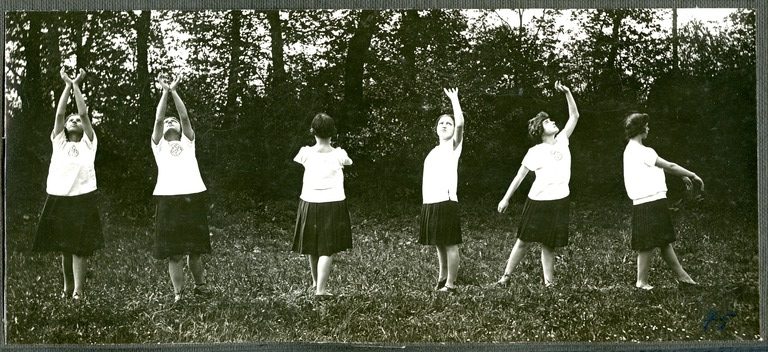
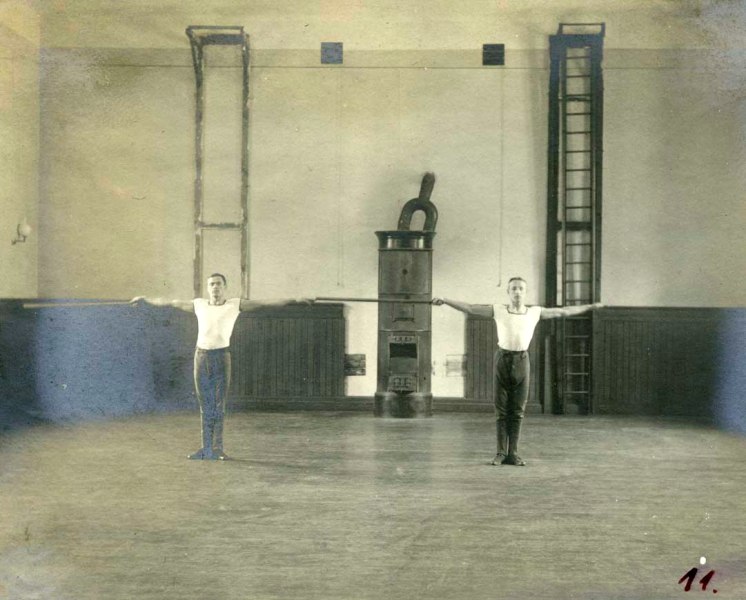
A distinct group of photographs was produced for instructional publications, where the images served either as illustrations or as reference material for creating graphic reproductions. A particularly good example is photograph no. 73 from Album No. 26. It depicts a series of free-hand exercises developed by Stepan Haiduchok in 1913 and published by Sokil-Batko in 1927. Members of SKUD posed for these photographs during the festival on 8 April 1927. Each participant demonstrates a successive stage of the same movement, with every pose capturing a single moment within the sequence.
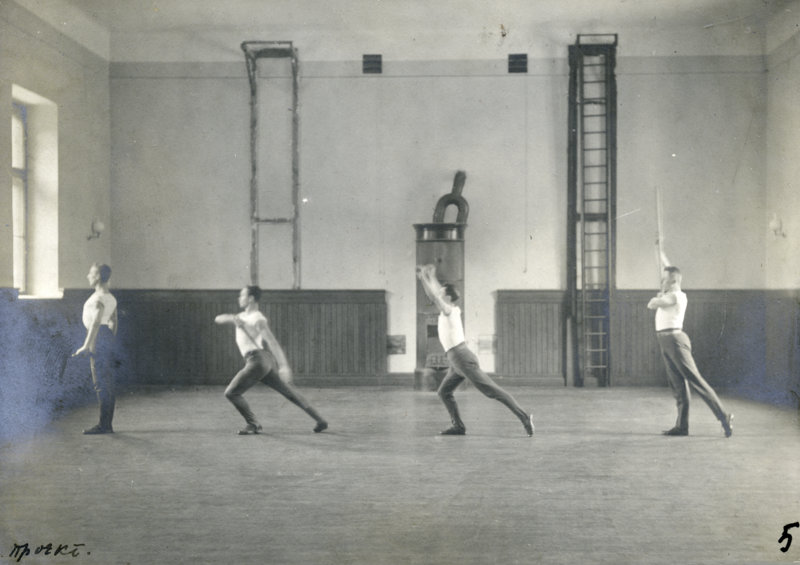
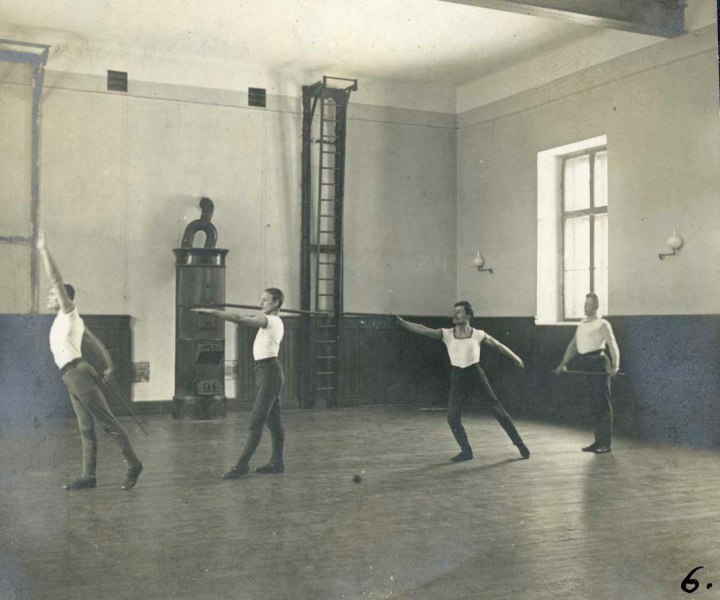
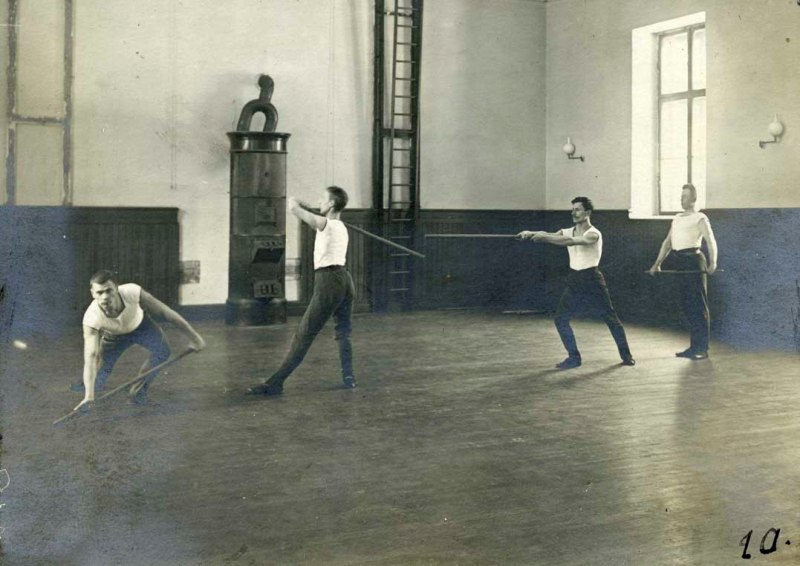
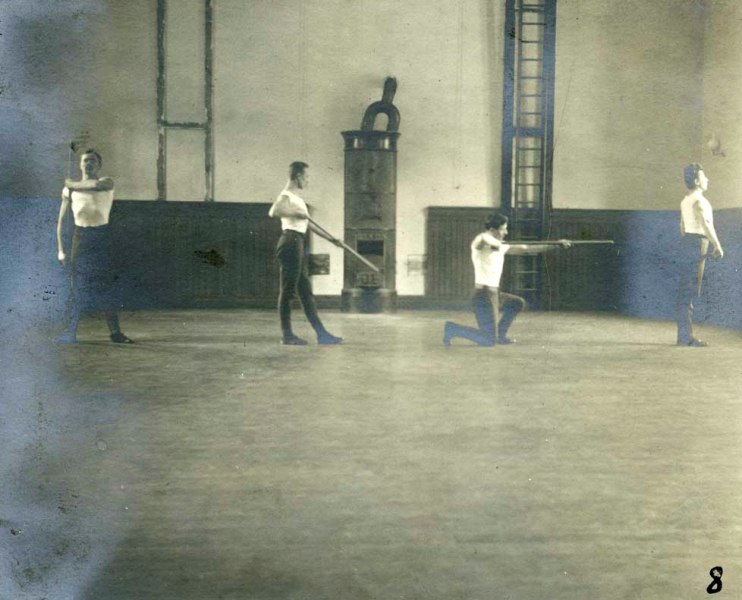
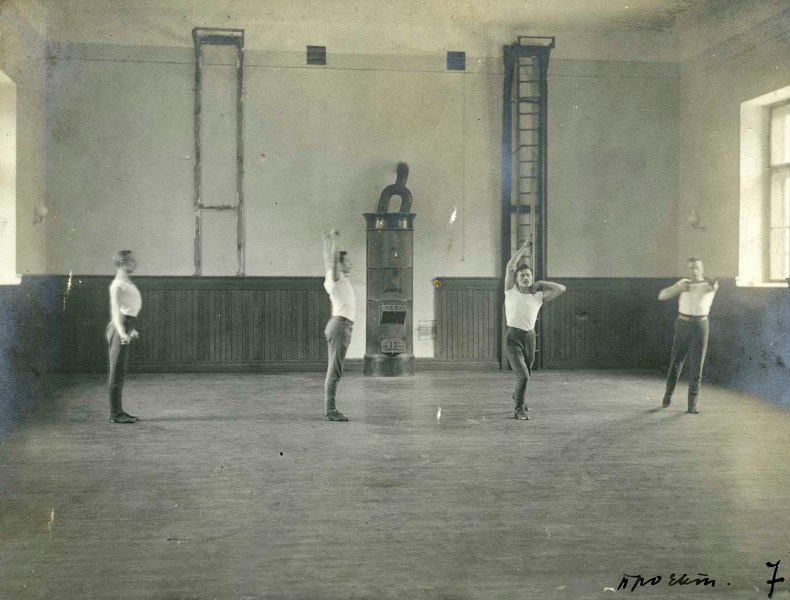
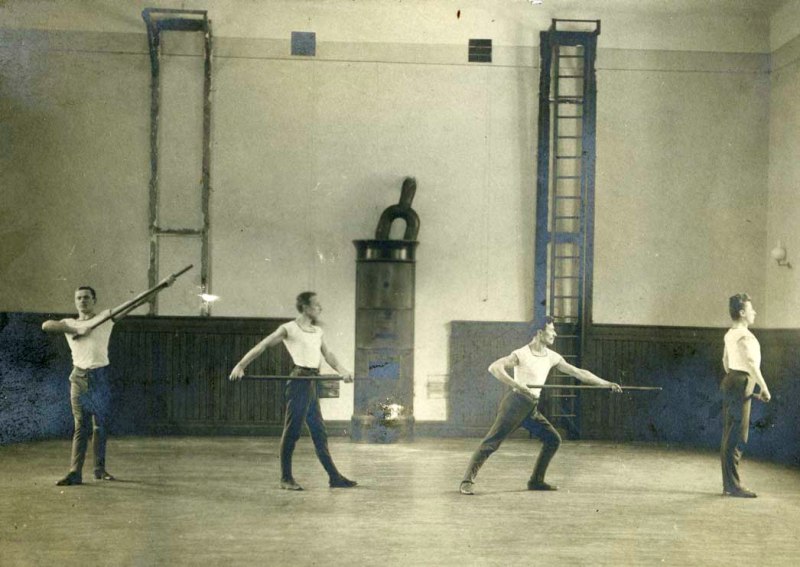
The series Exercises with Clubs according to the System of Ivan Boberskyi, dating from 1911 and preserved in Album No. 5, consists of seven photographs showing members of the Sokil society demonstrating the exercises at the Academic Gymnasium in Lviv. Haiduchok notes that these exercises were lithographed for practical use. He was most likely referring to photolithography, a technique invented in the mid-nineteenth century that combined photography as a rapid means of producing images with lithography as an efficient method of reproduction.
The visual materials preserved in the Stepan Haiduchok Collection reveal sports photography in Halychyna not simply as an illustration of the history of sport, but as a distinct field in which photographic technology, physical culture and broader social ideas intersected. Developments in photographic technology created new possibilities for representing movement, while sport itself became one of the most technically demanding and visually compelling subjects for photographers.
The photographs in the collection demonstrate a wide range of visual strategies, from carefully staged portraits and static towers to attempts at capturing the fleeting moments of competitions and team sports. They document not only athletes, but also photographers, spectators, training grounds and sporting venues, as well as the various ways in which photographs were used in the press, publishing, education and civic life.
Perhaps most importantly, these photographs formed part of the broader project of Ukrainian physical culture. They documented the activities of sports societies, promoted physical exercise, and helped shape the image of the modern, healthy and disciplined citizen.
Stepan Haiduchok (1890–1976) was a professor of physical education, an activist of the Ukrainian Sokil movement and the Ukraina Sports Society of Higher Education Students, and one of the organisers of the sports movement in Halychyna.